Lucas Haley

Just a personal website.

Thoughts on sheepherding
#Original Games #Games #Sheep

I am currently working at Massey University in New Zealand. The university has three campuses — Auckland, Manawatū, and Wellington. Wellington has the College of Creative Arts, which is where I'm working.

The Manawatū campus is the premiere veterinary university in New Zealand. A lot of Massey's identity comes from it's agri — vet, food science, farm engineering, etc. And while CoCA is the oldest (and arguably best, not only because I'm there) art school in NZ, there is still a patina of agri across all of Massey.

So I'm learning about sheep dog herding.

It's very fascinating.

Bear with me here. I read a random scientific article a couple of weeks ago about sheep and sheep dog behaviour, and how using drones some scientists have started to research how the whole thing works. And while the article didn't get very far, it did introduce to me the basic sheep dog commands: come by, away, lie down, walk on, etc. And the seed was planted.

By the way, one of the best websites I've found for sheep dog stuff is this one.

Here's the thing that interests me: with sheep dog herding, you basically have a bunch of autonomous agents (the sheep), with their own behaviour. There is also a single autonomous agent (the dog), that has it's own behaviour – but will respond to the owner's verbal and whistled commands. If the dog is trained well enough. The natural progression is to make this into a game.

I've made some headway – the sheep behaviour is pretty rudimentary right now, but workable. They wander looking for food, and get nervous and scared based upon the presence of the dog.

The dog's behaviour is a little trickier, but I've made some progress there too. It successfully corrals the sheep.

Most recently I've added the IBM Watson speech-to-text functionality, allowing the player to use voice commands. I'm in the process of iterating the dog's behaviour to react.

After that, it'll be refining the behaviours to allow for sheep and dog personalities, and lastly making a VR version. Just because.

{% include youtube.html id=“mquZPv50nd0” %}

A divination deck.
#Games

The Dark Exact, otherwise known as Coleman Stevenson, is a one-person divination powerhouse from Portland, Oregon. Her work spans original tarot decks, ritual kits, and divination guides; all with a striking black and white minimalist aesthetic.

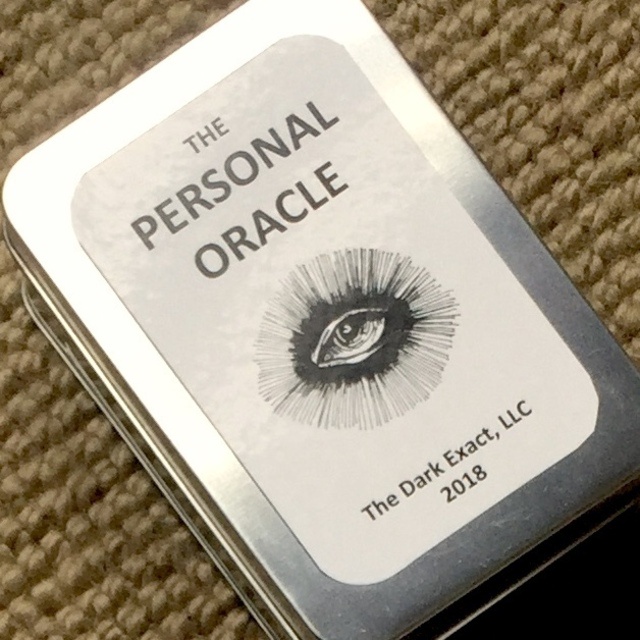
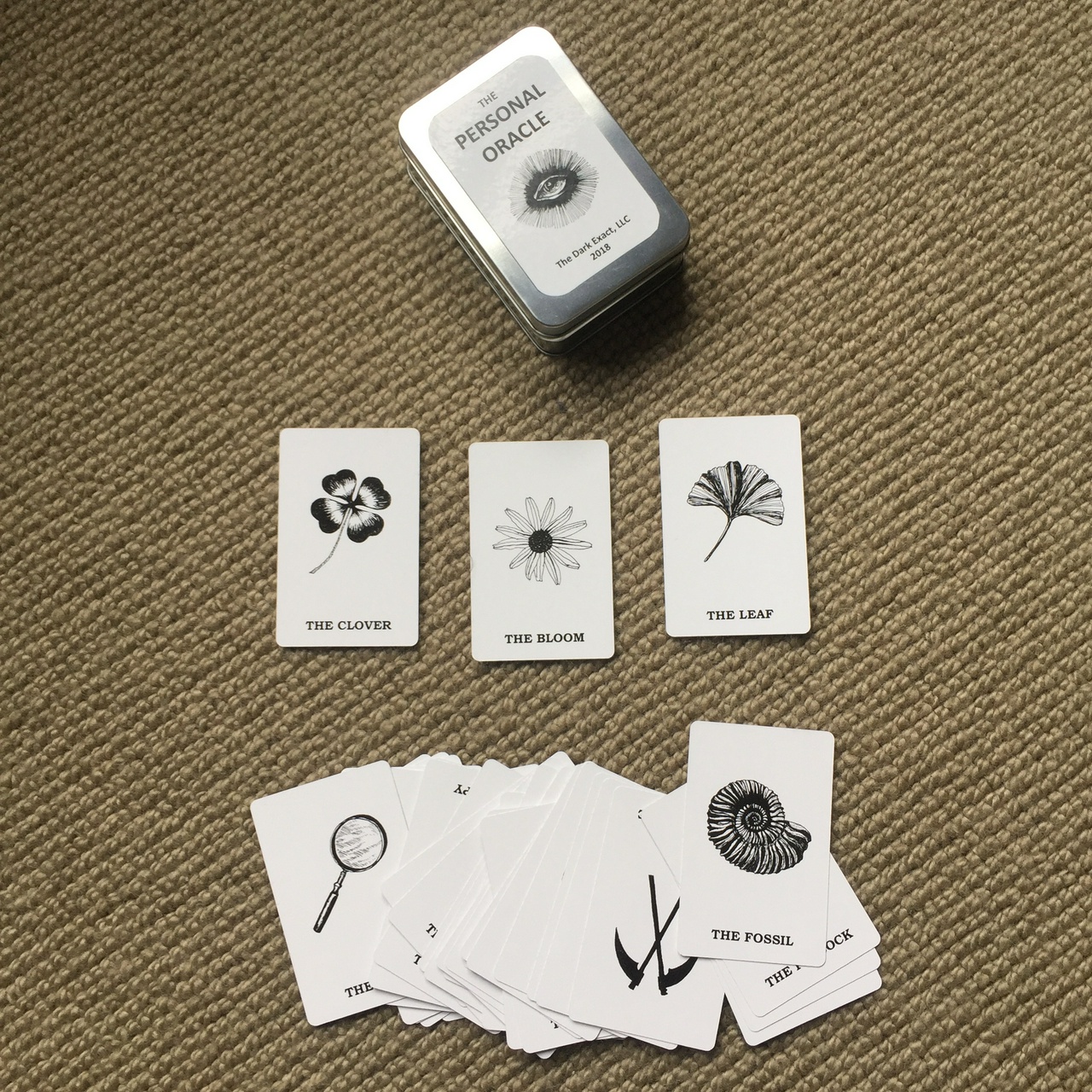
Her latest work is a compelling evolution – The Personal Oracle. Breaking from the traditions of tarot, this deck is near-blank slate for users to investigate and develop. Presented are 39 cards, each with an image and title; the symbols are varied, ranging from “The Boot” to “The Sun”, with a fine selection in between. The symbols are untraditional but non-arbitrary, selected with unspoken intention – they are open potential. Unlike the tradition tarot with its fixed symbolism and centuries of interpretation, this deck is meant to be interpreted anew by each owner. The accompanying book is mostly blank, so that each owner can fill in their own guide as they use the deck.

My first reading

It's a very clever idea, and one with a lot of merit. I've always loved the traditional tarot, but have often struggled with the internal symbolism at work. This deck makes no bones about being a pre-picked selection of symbols – each having a meaning for the original author – but are generic and non-judgemental enough for any owner to take them in their own directions. The thing I admire most about the deck is that it acknowledges that “fortune telling” is not about magically telling the future, but about a process of investigating one's own intuition through symbols – and in this case, the deck abandons the traditional tarot for a tabla rosa, allowing for that investigation to happen without historical baggage. I'm excited to explore this deck, and begin to develop my own symbolism. Some initial thoughts:

  • the artwork is clean and crisp. Beautiful stuff

  • the deck is small – smaller than tarot or poker decks – but I find that a nice portable size

  • the deck is pretty lightweight – for an object that is meant to grow with the owner, the cardstock is thin

  • This requires a lot of work from the owner, as you need to create meaning and interpretation from scratch. But that's its strength too

  • I've been struggling with there being 39 cards. I feel like that number should have meaning, but haven't gleaned it yet. WHY 39

  • I really, really want to make a game out of this deck

The Personal Oracle from Etsy

When sounds make the game.

For a group show opening in December I am creating an audio experiential game world. The idea is that there are no visuals for the game — the player needs to navigate a world using only 3d positional audio. I will attempt to create a narrative from the movement and interaction of the player in this world.

In researching my concept, I came across this article on Audio as Gameplay by Aaron Oldenburg. Good stuff.

Note: this project can be seen here.

Splash

Big nerds.
#Books #Programming

Related to the prior post, I've also just got my grubby hands on the Big Nerd Ranch iOS Programming Guide. I can't wait to see how Hillegass and Conway convey the info. As an instructor myself, I've always had great respect for their ways. I still have their first Cocoa book. Ahhh, good times.

Suddenly teaching board game design
#Instruction #Board Games

So I just wrapped up spring quarter at the Art Institute of Portland. A week before the quarter started, I was suddenly assigned to teach “Game Design and Play”, the board game design class. I had never taught the class before, and although there were some existing syllabuses, there really wasn't anything to go on. And not enough time to get anything going.

Now I'm not the most structured of teachers – I prefer leaving the class open to go where it needs to go, as the students explore the material. But this class was well beyond that. I was upfront with the students, and together we explored the material. It was fun.

Hopefully it was enlightening.

Part of my approach was to bring the idea of a game to all parts of the class. For their final, I challenged them to come up with a complete game in the two hours allotted. The main requirement was to have, as the central game mechanic, something involving the following (which I provided):

  • 3 standard four-sided dice; red, green, and blue
  • 1 blank white four-sided die

They were also allowed to use the small plastic case the dice came in.

Beyond that, the students could include anything they could come up with. I had some construction paper, colored and white cards, and the like.

Now, I hope the students were sufficiently challenged, and had fun with it. But the things that really struck me about their process were:

  • how much the students wanted to team up. There were two teams of five (five!) people, and some individuals. I couldn't tell if it was safety in numbers or a genuine desire for collaboration. It was just surprising. If that were me, if I were to team up, it would be with one other person. Maybe. Not that I dislike teams, but that in those initial brainstorming minutes, I would want direction and focus, not consensus.
  • how much video games influenced their designs. It's a video game world out there now, and the majority of the games they came up with were video games on paper. Again, I'm not making a judgement call here. But I do think that video games and board games are different, and each design process should be different.

I'll be teaching the class again in the fall, which I am looking forward to. I'll hopefully have time to develop more lectures about game theory, combinatorics, emergent behaviour, metaphors and mechanics.

And I'll have to come up with a new final exam challenge.

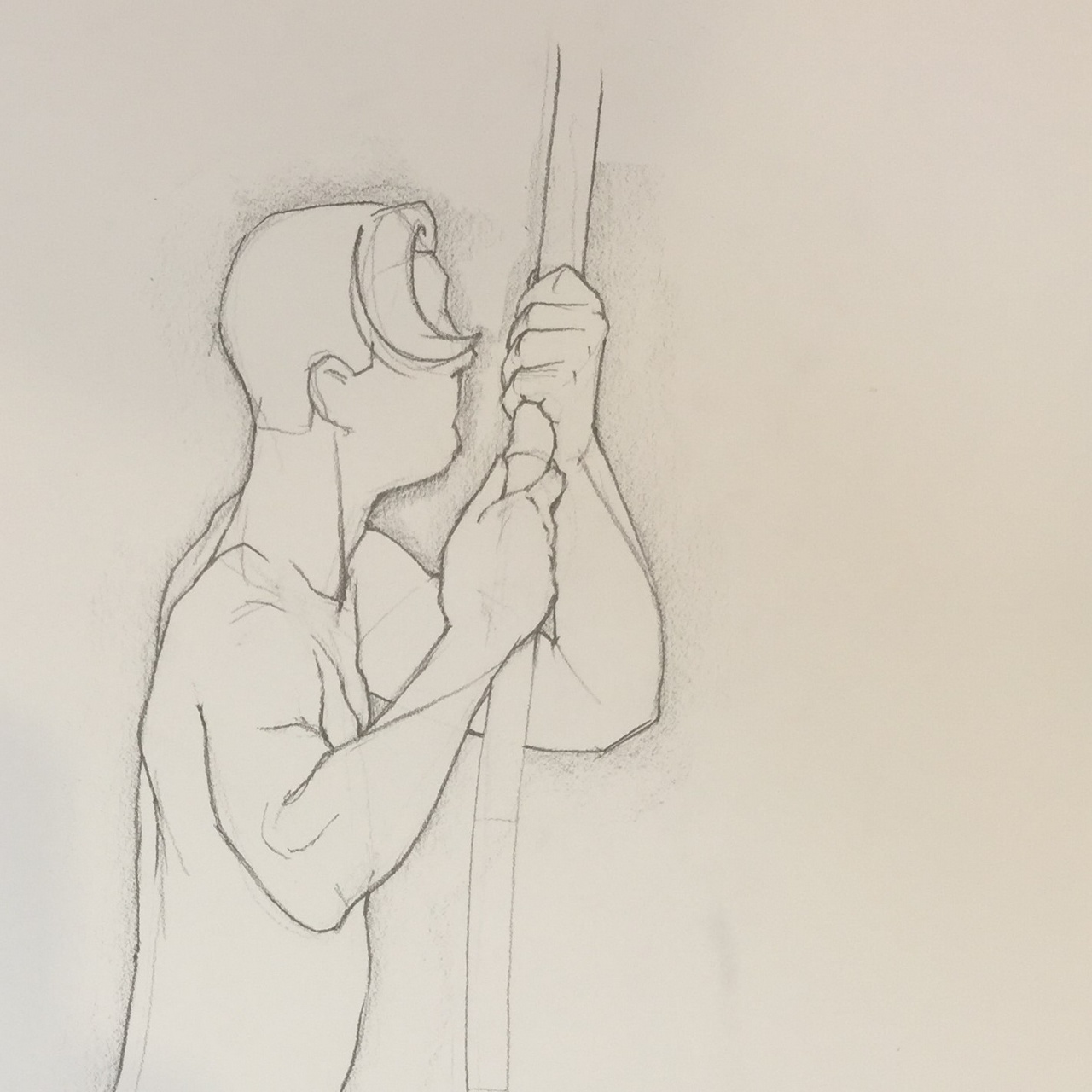
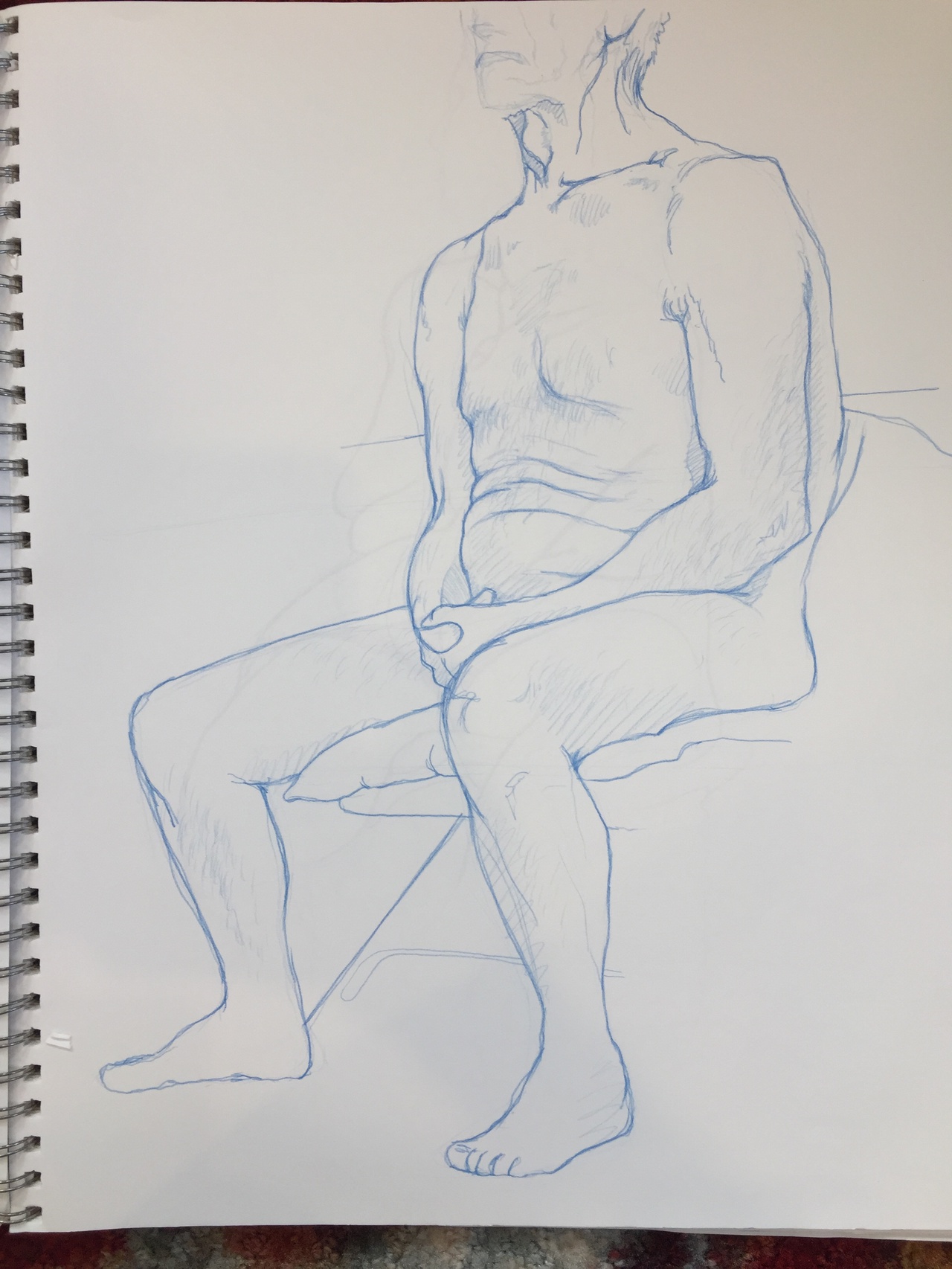
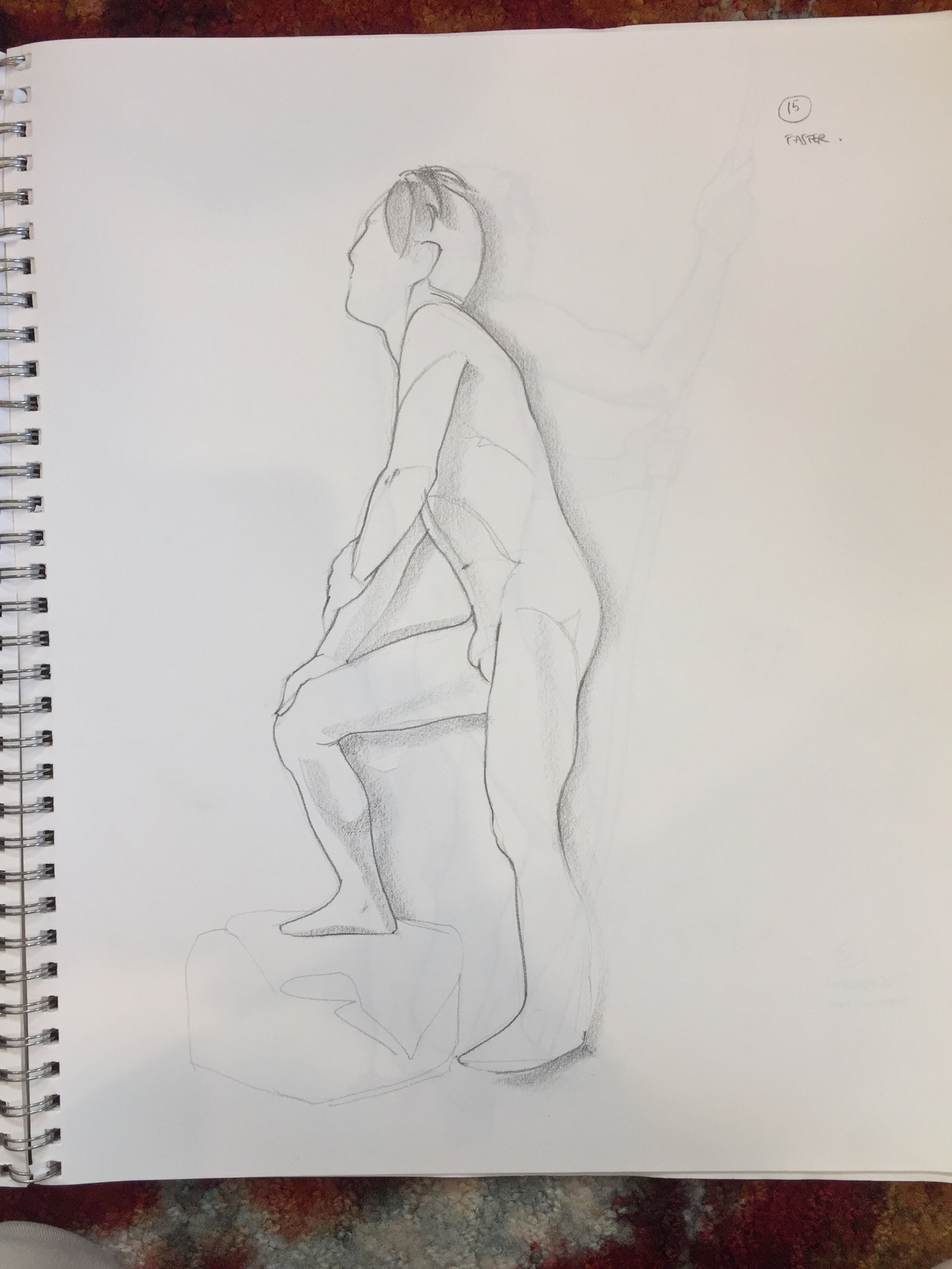
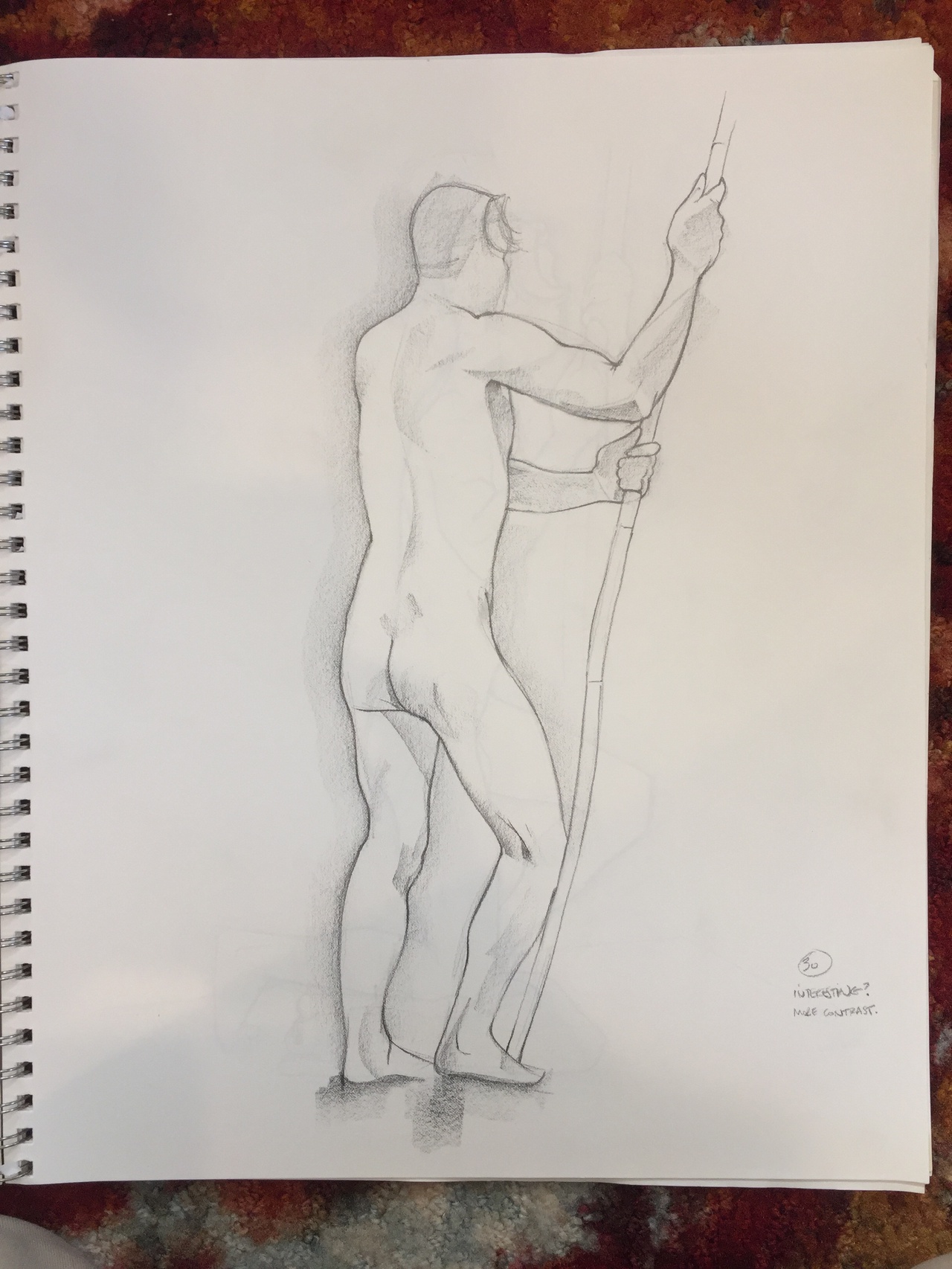
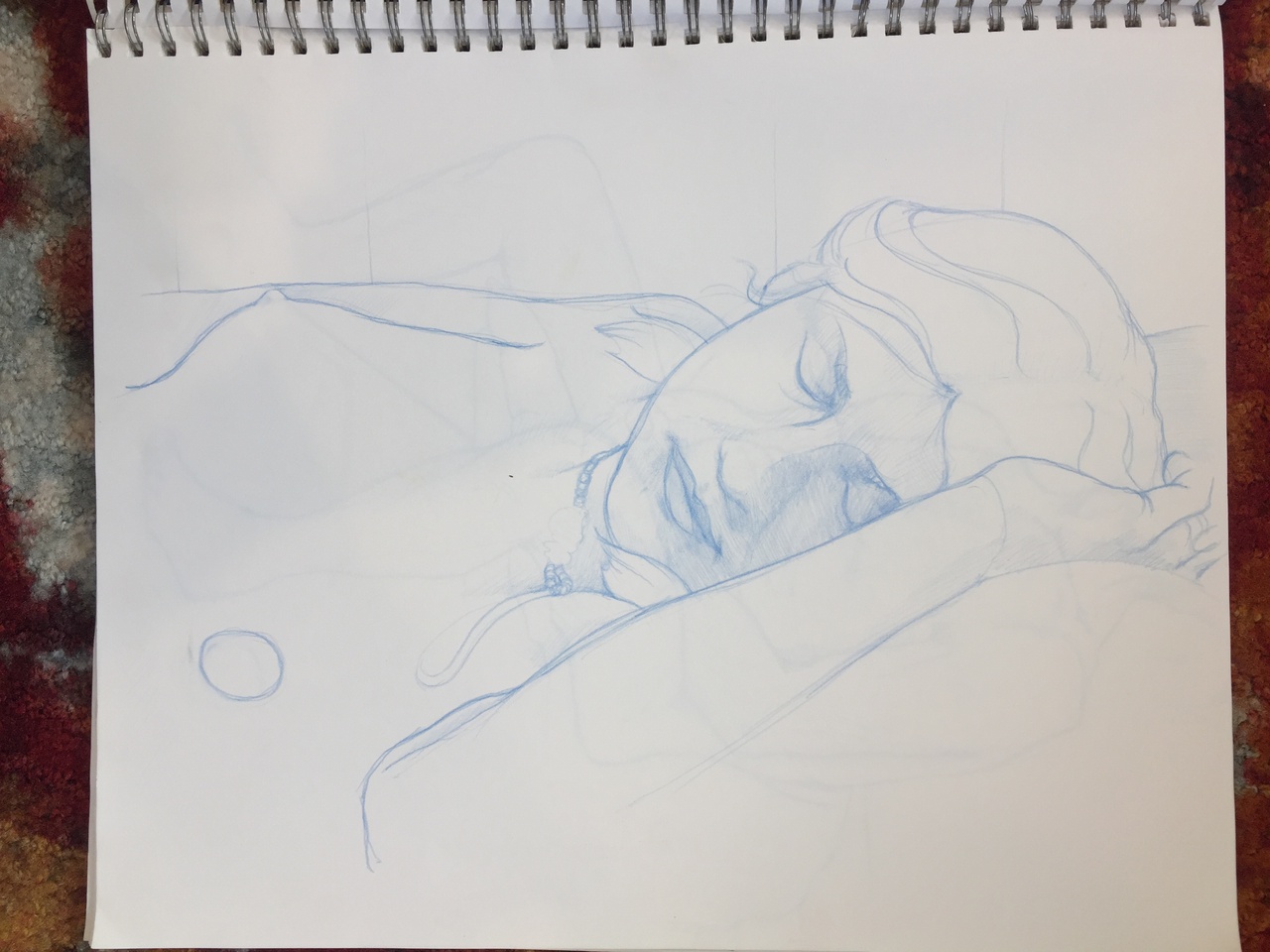
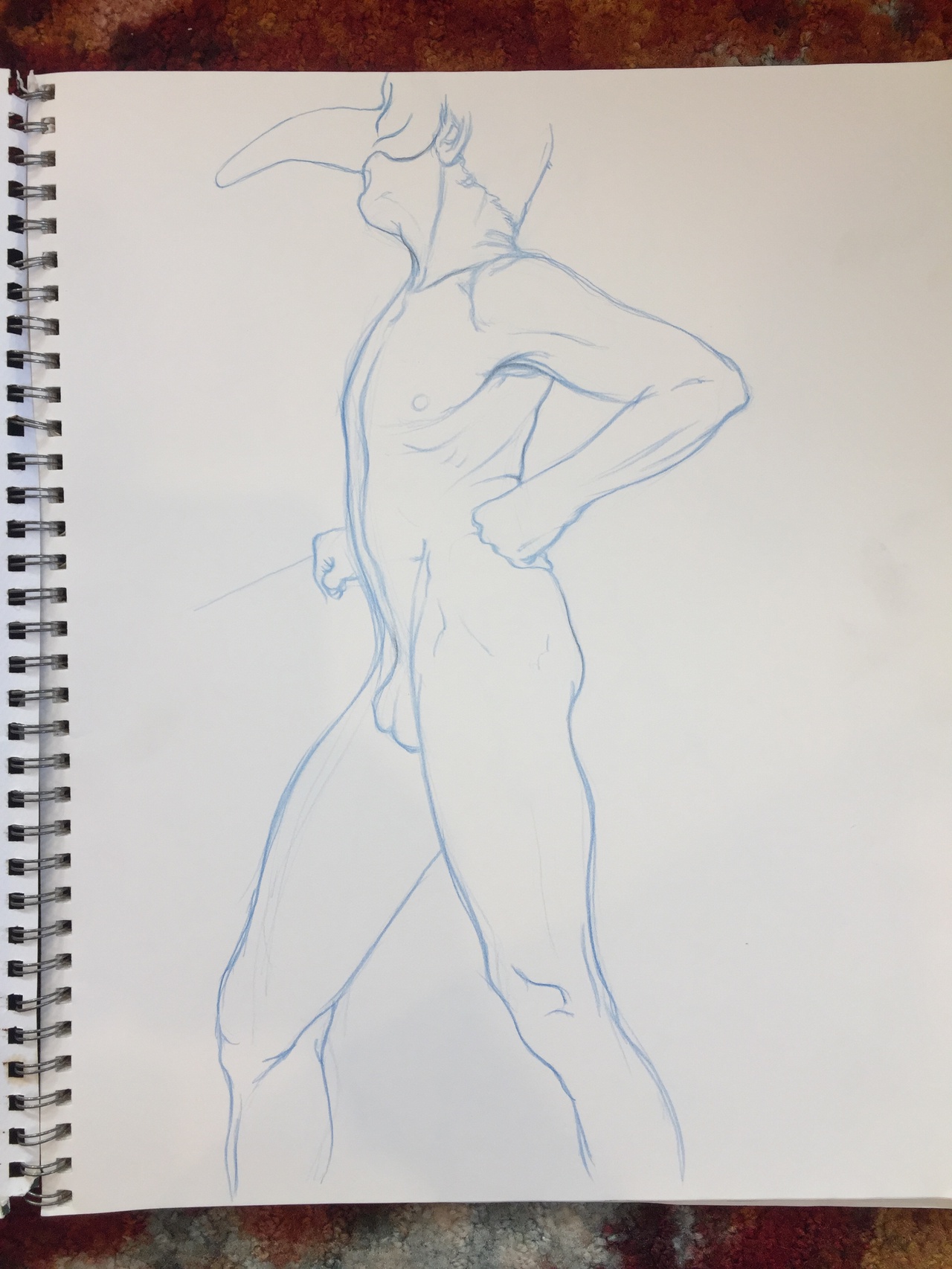
Just some old life drawings. I love drawing from life.

Splash

Teaching history and philosophy through art.
#Art #Teacher

Robert Orme was my Art History teacher in high school. I was the only person in my year who wanted to take the subject, but he was willing to tutor me one-on-one.

He was brutal.

He was the teacher who held me to a higher standard than I thought was possible, and introduced me to dedicated research and critical thought. He made me read extensively, questioned me at every statement, and demanded rigor at all times. For the UK A-level exam, we were expected to sit the exam and write essays. Long-form essays, by hand. With illustrations. And correct dates. He had me memorising the dates of every major piece of art from Giotto to Hopper, and he didn't let up until after the exam. He had me writing 25-page essays, alone in his office, every week. When it came time for the exam, I churned out over 50 pages of handwriting in one day.

I was always interested in a history of ideas -  I thought that paintings were the best way of communicating the ideas or beliefs of people in the past. So as soon as I was teaching history, I automatically did it from images from art, from slides in those days, and used the slides as the thing that would mean that you would instantly get a reaction from a group of kids who would want to interpret the image, would want to ask questions about it, then… a debate could begin.

Looking back on it now, after oh 25 years, it was really quite remarkable what he asked me to do. I am tremendously thankful for the experience I had with him. He is the man.

Update

I just found this tribute video.

Does this mean I have an ENnie?
#RPG

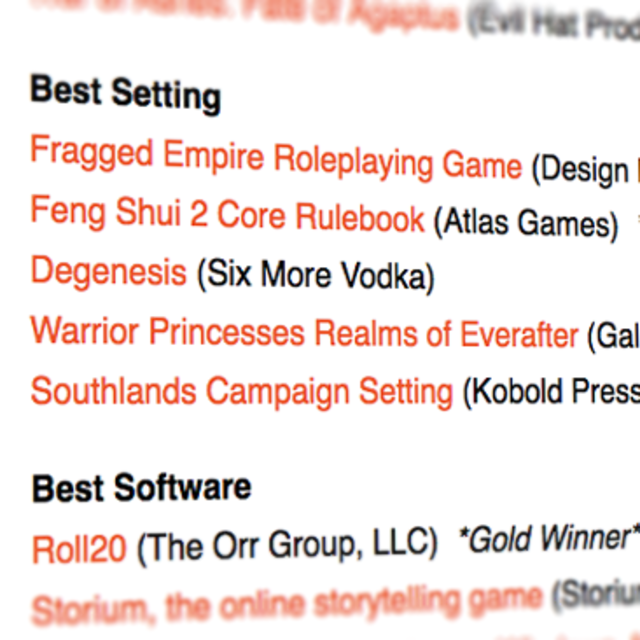
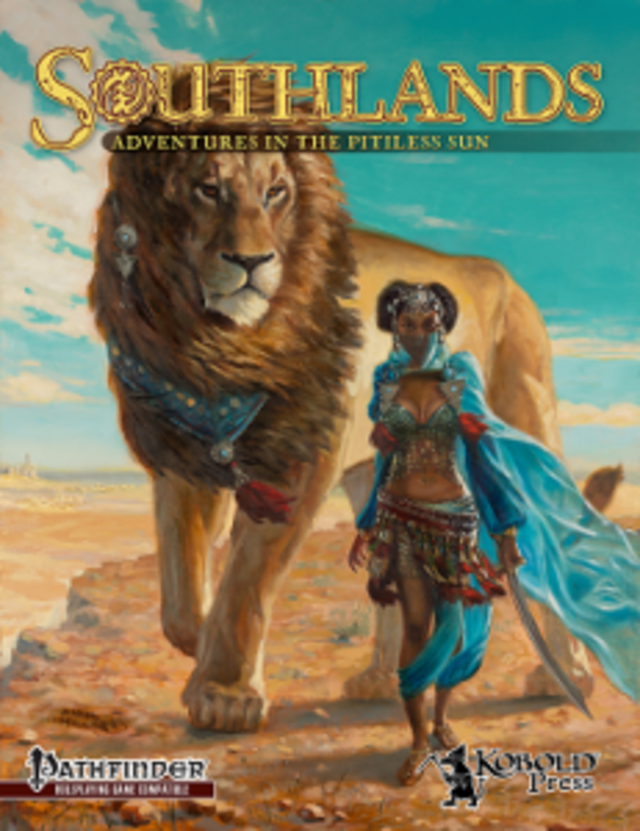
The Southlands guide book has been awarded the Silver for “Best Setting” at the 2016 ENnie awards.

Making Top Trumps with the kiddos.
#Original Games #Games #Personal

This whole 2016 election cycle was craziness. But one thing that kept popping up in my mind was the classic kid's card game Top Trumps. It's a game I have distinct memories of playing as a kid in the UK.

Gameplay is pretty simple: each card represents a thing (car, superhero, etc), that have a selection of numerical attributes (speed 32, handling 14, torque 22, etc). Each player's cards are stacked so only one can be seen. On their turn, a player picks one of those attributes, and the player who's top card has the highest value in that attribute collects the trick. The player with all the cards at the end wins. It's a great game for young kids, as it has some math, some social interaction, and up until the end is pretty balanced. It also has the cards in a stack instead of a fan, so young hands can manage.

The thing that interests me about the design of this game is the selection of attributes, as these attributes intrinsically carry value. Then each character embodies these values based upon their numbers, so the characters themselves carry value. So there are two points of value judgement: in describing a character, and in associating with a given character. This leads to the “top trump” card — the most powerful card in the deck. So, for example, a version that chooses for its gameplay attributes “power, speed, looks, volume” carries a different set of values than a game that chooses “heart, empathy, diplomacy, cooperation.” Secondly, a card that scores highly in those attributes will carry more gameplay weight, and therefore carry more value.

Especially for a kids' game, this feeds into a child's collection instinct and reinforces those external values. Naturally, there will be players who do not associate the numerical values with judgement values, and play the game in the abstract; but I feel that they are in the minority amongst children.

The gameplay lends itself very well to theme skinning, as can be seen from the multitude of versions out there. Currently there are a lot of versions targeting boys — Transformers, superheroes, etc. — which isn't surprising. But there were also some targeting girls — My Little Pony, Barbie, etc. Being personally invested in games for girls, I checked some of them out. Naturally the Barbie one was fairly insipid (“Which is the most glamorous? Never enough pink! Born 2 be fabulous! If it comes in sequins I want it!”). The My Little Pony one was alright (gameplay attributes: “size, magic, friendship, mischief, beauty”).
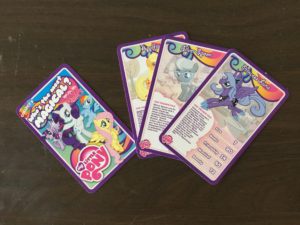

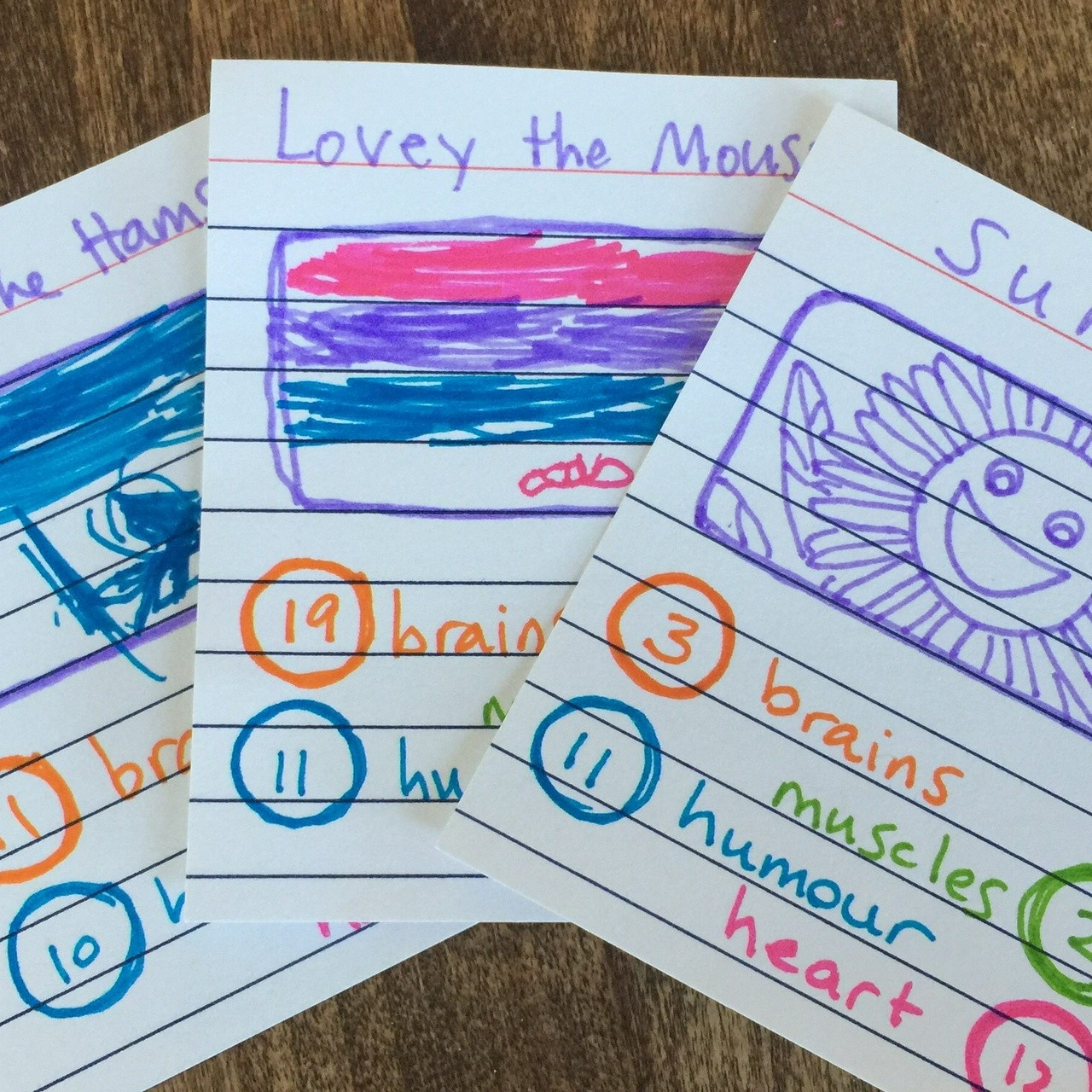
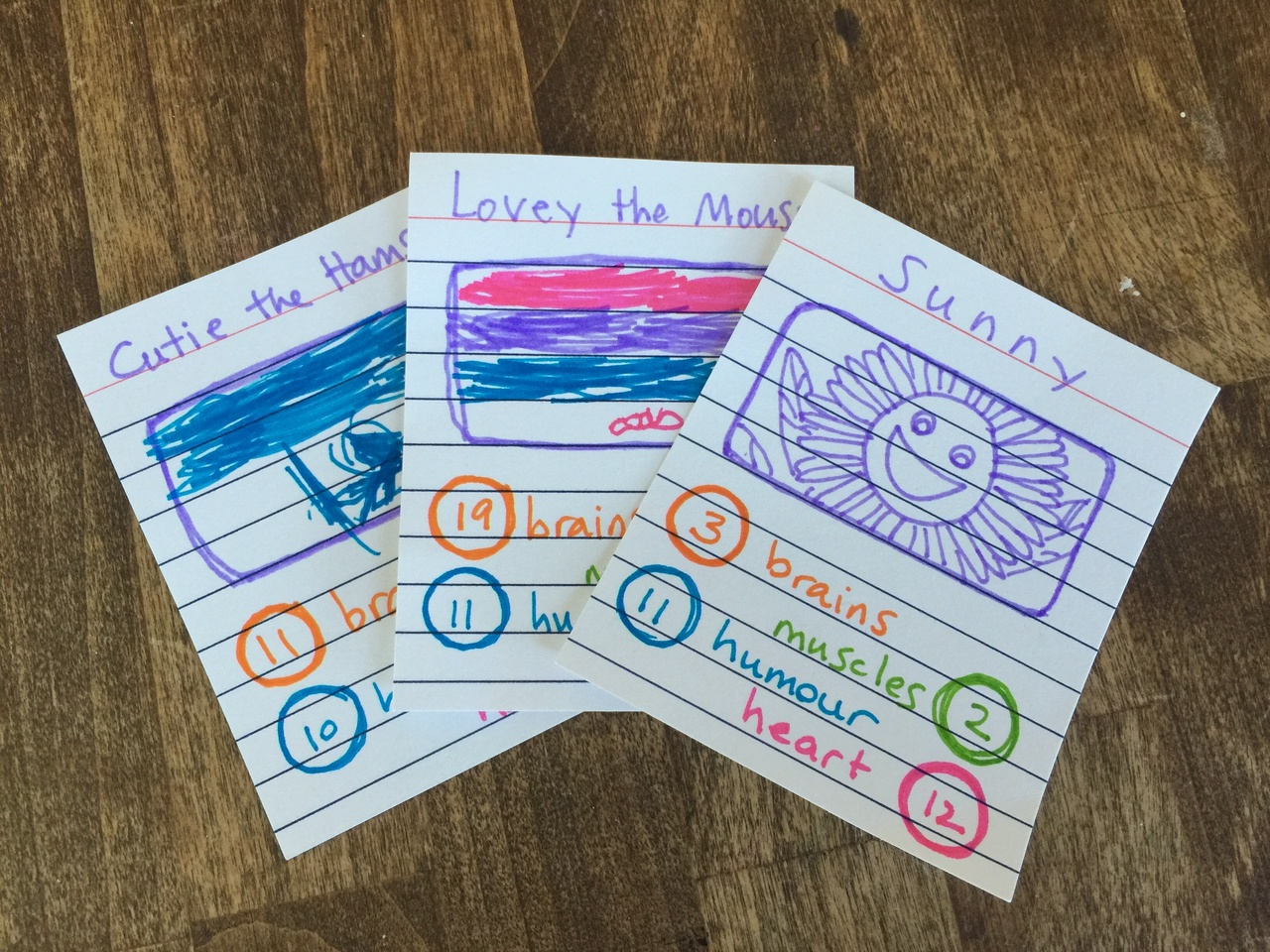
So I set out to make a deck with my own kiddos. We sat down and figured out the values we wanted to attribute, designed a template (colours work great for those kiddos who can't read yet), and set out making cards. I wanted it to be directed by W and Q as much as possible, so I set no guidelines about who the characters should be.

The girls decided on brains, muscles, humour, and heart. From there they drew the characters, and if needed gave them names. It was interesting to see Q start with established characters: Doc McStuffins, etc; and W went with real people: Mom, Nani. But pretty soon they both started making characters up. The next step was to get them to give each character numbers for the attributes. This was initially a challenge, as they both wanted to max out each character. We worked on comparisons — is “Dog” funnier than “Poppy the Pillbug”? This worked, but it was a bit odd with the real-person cards. With W's “Mom” card — which is clearly the “top trump” — W asked if she needed to stick to the 1-20 range for “heart”, or if she could go higher, “like a million or something”. It was very, very sweet.
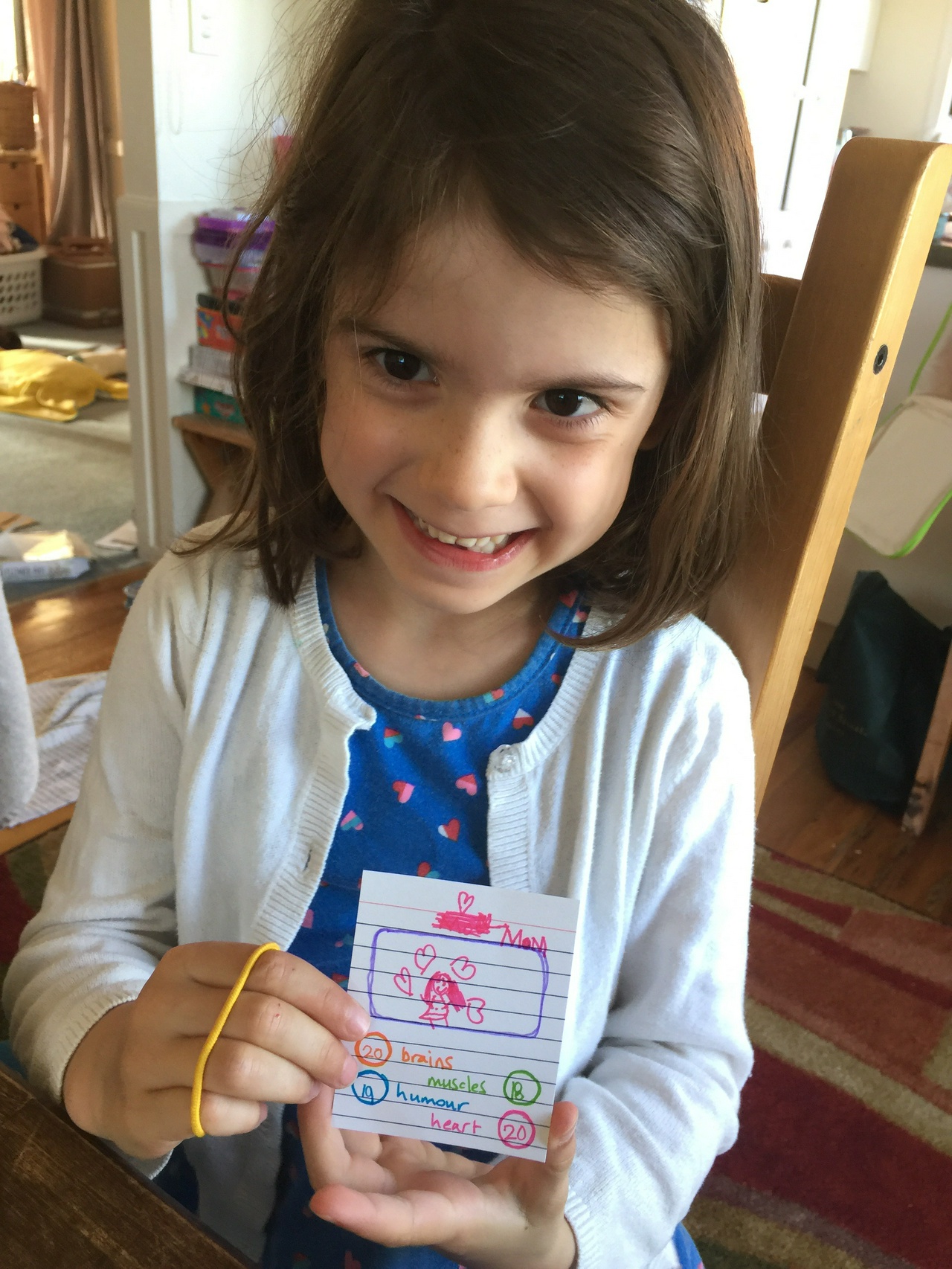
W with the “Mom” top trump card

Finding compelling gameplay in simplicity
#Original Games

I've been poking around into mechanics recently, and starting playing around with the idea of a very basic game. I don't mean “basic” in terms of easy, or boring, but rather a game made from the basic building blocks of board games: a grid, and some pieces. I've given myself some limitations:

  1. the game requires the use of common game pieces. Most likely a checkers set
  2. the game should be two-player, but strive for indeterminate mechanics
  3. the game should be easy to learn
  4. and because I'm here in New Zealand right now, the game should incorporate Māori terms or principles

I've already got a couple of pages of notes, but I've also discovered that I don't have a checkers set here in NZ. Durrrr.