Lucas Haley

Just a personal website.

Making games with the kiddos
#Original Games #Games #Personal

As part of her weekly homework, my daughter brings home a board game from school. She's 5 years old, “Year 1” in NZ parlance. The games tend to be designed along whatever lines they're teaching at school — usually simple math — and themed almost at random (“this game is about fish! Help the fish count and get him to score the winning try!“). We all get together and play them in good sport, although I do try to resist the urge to explain Markov Chains to her. That can wait.

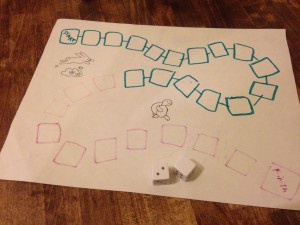
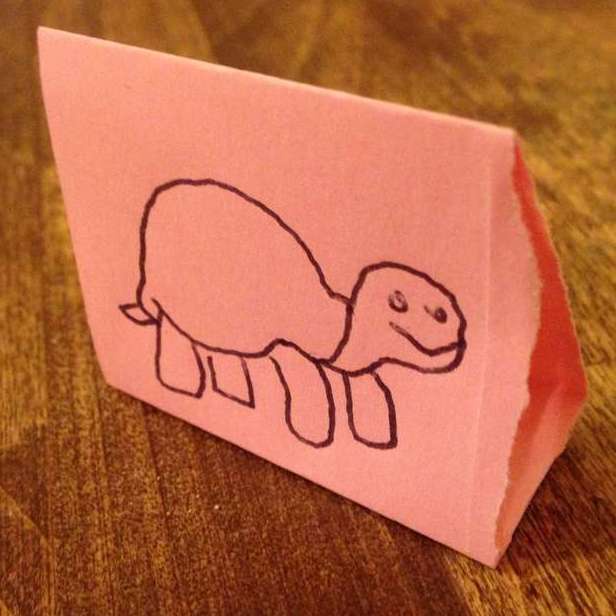
But it did get me wanting to design a game with my two daughters. So I pitched that we spend an afternoon or two doing exactly that, and they were game for it. Days before I had told them the story of the Tortoise and the Hare, and it seemed a good starting point: the race provided a linear A to B structure that would fit in with their other homework boardgame designs. So we chatted about how the tortoise moved, and how the hare moved. They liked rolling dice, so it seemed fitting to do that. I first showed them different types of dice, and how a d4 has a different movement than a d12. We tried a couple of tests with these, but it just meant the hare pretty much always won. Next I showed them some blank dice, and we decided to use those. Because you can draw on them.
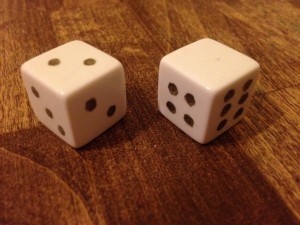
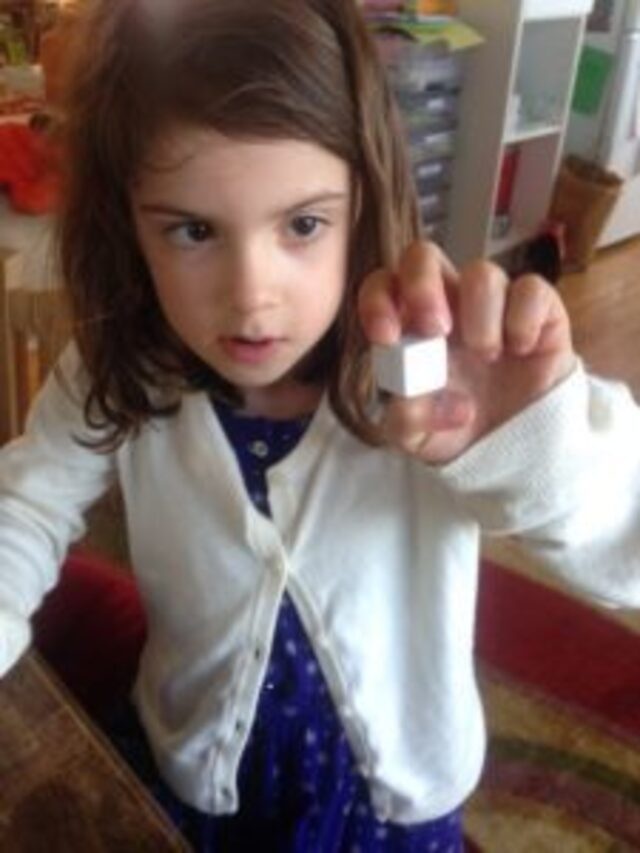
We chatted about different die pip values and frequency, and how you can change the movement of a die. We went to AnyDice and saw some charts, which they enjoyed a lot more than I was expecting.

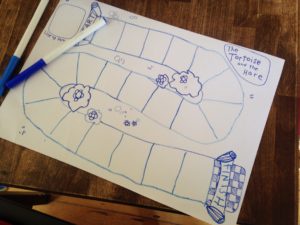
We ended up with a pretty good balance of numbers. The one thing was the blank sides for the Hare. We wanted to have the Hare stop along the way, and had tried using “must stop” locations on the board, but that seemed to have a predictability that wasn't desireable. The blank die sides are effectively a “miss a turn” roll, which is often bad game design, but it matched the metaphor so well we kept them. We did have to do more balancing later, but more on that later. The next step was the board. James Ernest has a great essay on volatility, including a section on the game “Kill the Elf”. In this game, the number of spaces in the race is effectively the hit points of the elf, and the tortoise the warrior and the hare the wizard. Too few spaces in the race, and the hare wins more frequently. Too many, and the tortoise has the advantage.

Board version 1 Board version 2 Playtesting

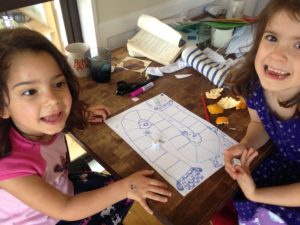
The girls were up for several rounds of playtesting. They definitely preferred to play the tortoise, but the hare won just as many games.

The game made it to school. The homeroom teacher took a look, and sent it back home with a note that there were “too many blank sides” to the hare die. It's always good to get external testing.

Splash

#RPG

Several years ago I made a map of Siwal for Kobold Press. As of a couple weeks ago, their new book Southlands was very, very successfully kickstarted.

This book expands upon the realm surrounding Siwal, encompassing savannas, jungles, deserts, and more. I'm excited to say that I've been asked to contribute at least three more maps to the book, all full page and full color.

Splash

Erotic telephone numbers. Except, not.
#Artwork

This summer I was contacted to participate in a group show, called “Beyond Erotic”. The show description read:

By using elements of sexuality or the erotic, artists face challenges when communicating other ideas through this lens. Likewise, the viewer is presented with the challenge of reading through layers of eroticism and sexuality to encounter concepts like humor, social commentary, personal choice, subversion of expectations, and to question the ascription of taboo. In Beyond Erotic, artists present evidence of these challenges and ask viewers to participate in a conversation through media including video game technology, painting, drawing, photography, tableau, performance, writing, humor, and automated sex phone chat. I was initially invited to show my “Controller” piece, but was also asked to create something new for the show. Going with the theme of the show, I created a phone sex line.

Yup. Called “SexPRIME”.

SexPRIME_Thumb.png

SexPRIME, while ostensibly some strange throwback to 1993's heady mix of pay phones, Photoshop type effects, and loose morals, is an exploration of self-identification, safe and unsafe spaces, and cultural restrictions on identity. It is entirely not erotic, in case you were wondering.

It can still be called at: 877-989-9091.

And yes, it's free to call. Honestly.

Checking out a book on interactive fiction.
#Games #Review

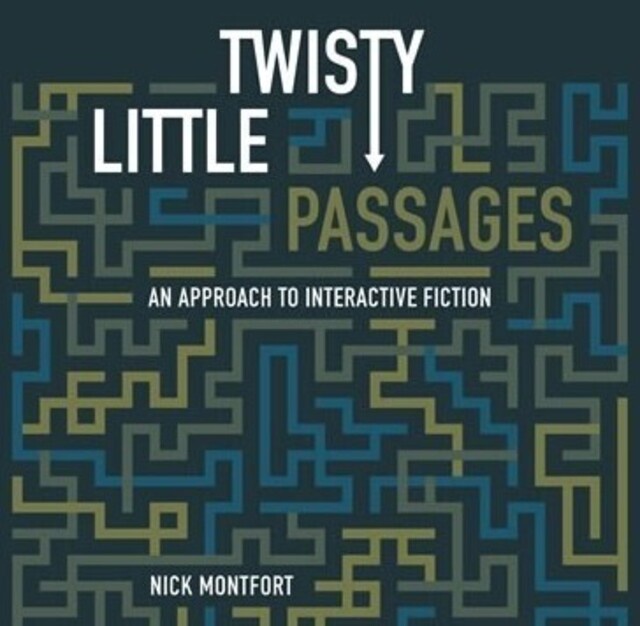
I grew up on choose-your-own adventures and Infocom text adventures. They're in my blood. So I'm a little predisposed to liking things that celebrate them. This is such a book. It's a pleasantly well-written history of the medium, along the way picking out specific examples of interactive fiction to highlight certain technological advances, cultural relevancies, or artistic developments. From a historical standpoint it leans heavily on prior work by Espen Aerseth, but this by no means devalues the work.

Montfort's initial argument is that interactive fiction shares much in common with the traditional riddle, and as such we can bring in traditional academic research on riddles to legitimize ludological studies:

The riddle, venerable ancestor of interactive fiction that it is, also goes a long way toward explaining how the literary and puzzling aspects of the form are hardly inherently antagonistic, but rather must work together for the effect of certain IF works to be achieved (Montfort, 63).

This book was inspiring to me on several levels. Firstly, in the academic rigor it displays in an emerging field of study, and the hopes I have for the same. Secondly, it made me desperately want to play those games again. From a purely practical standpoint, the incredibly well-researched bibliography is worth the admission alone.

I don't know, and that's great.
#Games #Review

This is a good book. It's short, but I also believe it could be shorter; it has some great information and is a worthwhile read. Costikyan's basic premise is that a essential feature of games is uncertainty, and that uncertainty originates from several locations: performative, solving, randomness, etc.

The book has seven chapters, but I see it as having three distinct sections: a general introduction to uncertainty and its sources, a lengthy analysis of many games using these sources, and a section on how designers can incorporate the idea of uncertainty to improve their games. While I grew tired of the lengthy analysis of games, it was in the applicability section that I felt the book really shines. My suspicion upon finishing the game is that Costikyan, an accomplished designer, has a very intuitive sense of games, and knows about manipulating uncertainty; that for this book he felt obliged to defend his own design experience with the analysis of classic and interesting games. Costikyan himself claims that looking at games through the lens of uncertainty is but one way to do so, and that such an approach is one tool in analysis and design:

Nor should you assume that uncertainty is the only important aspect of games, and that by understanding where uncertainty lies in a game, you understand it in an essential way, any more than, say, by understanding the role of plot in a novel, you understand everything worth understanding in it: subtext, the use of language, and the ways in which character is expressed are all of equal importance (Costikyan, 113).

Overall, this is a very worthwhile book for the demands it puts on the reader, and a very worthwhile addition to the study of games.

  • * *

Update: I just realized that Greg Costikyan was one of the original designers of the Paranoia RPG. That's bloody fantastic.

#Artwork #Personal

I just had a lovely studio visit from Bean Gilsdorf. The process of a studio visit is fascinating — two people, who probably have never met each other, get together and talk. Things like that should happen with more frequency. And happen across disciplines.

We only had half an hour to chat, so we didn't get too in-depth, but I was excited to hear her thoughts about how to get the most out of grad school, ideas on submitting proposals for writing, and about the importance of just getting out there and talking with people. It's given me more impetus to get deeper into the Portland art scene, and see what's going on around here.

I would strongly recommend anyone take a look at Bean's work, and especially to check out her column Help Desk with the Daily Serving.

#Audio #Game Design #Artwork

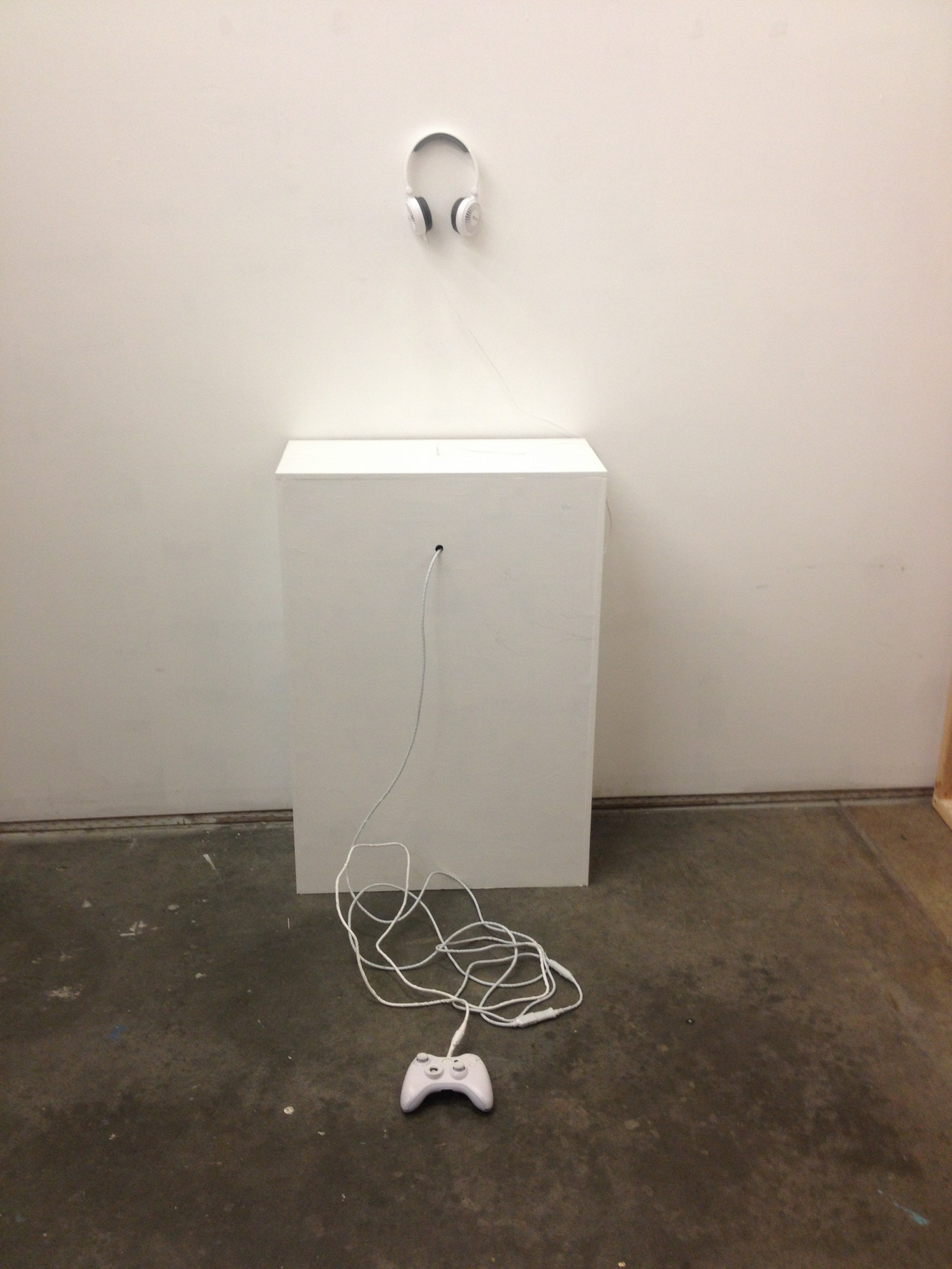
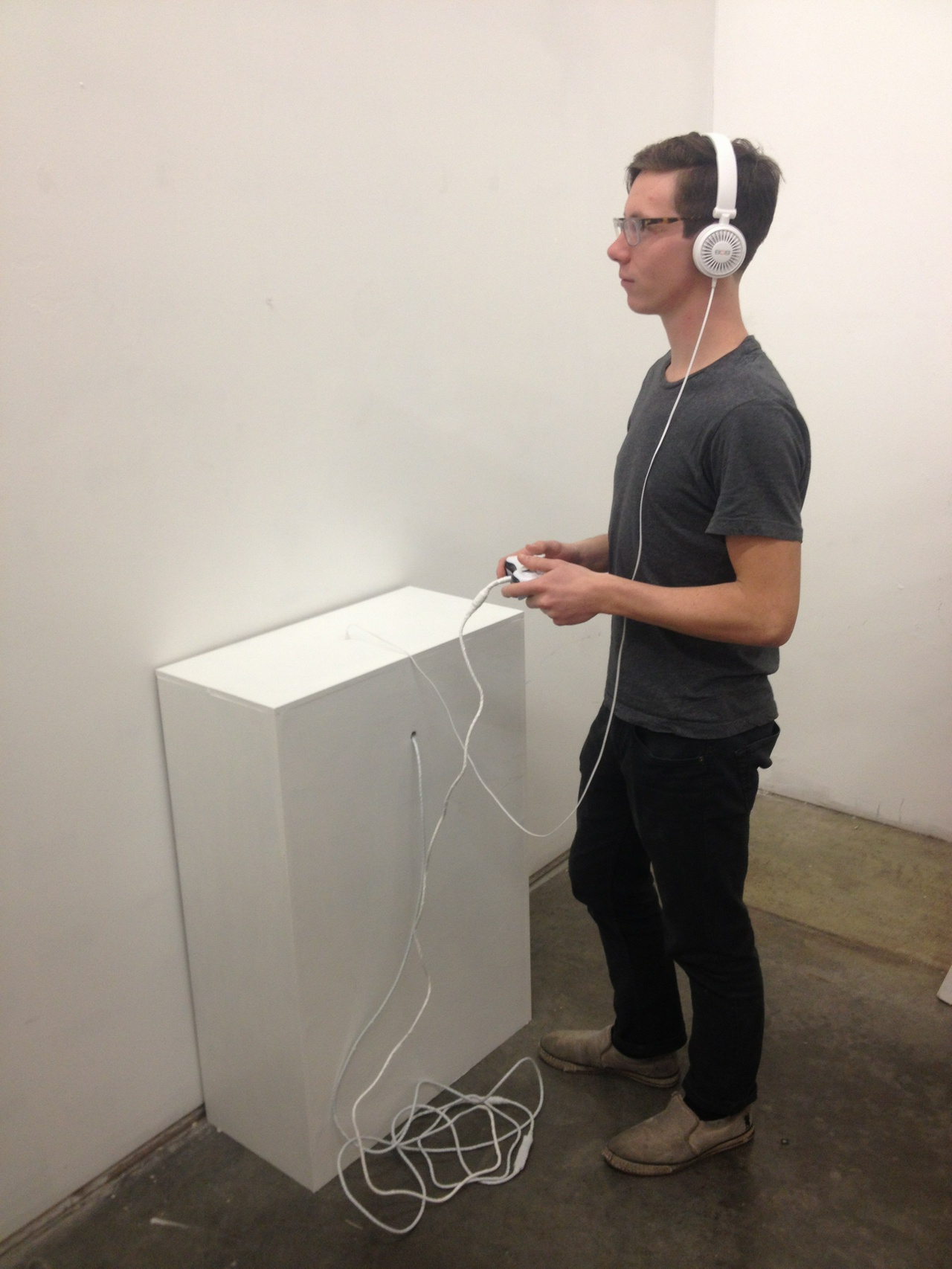
Installation • The Lodge Gallery, Portland November 2013.

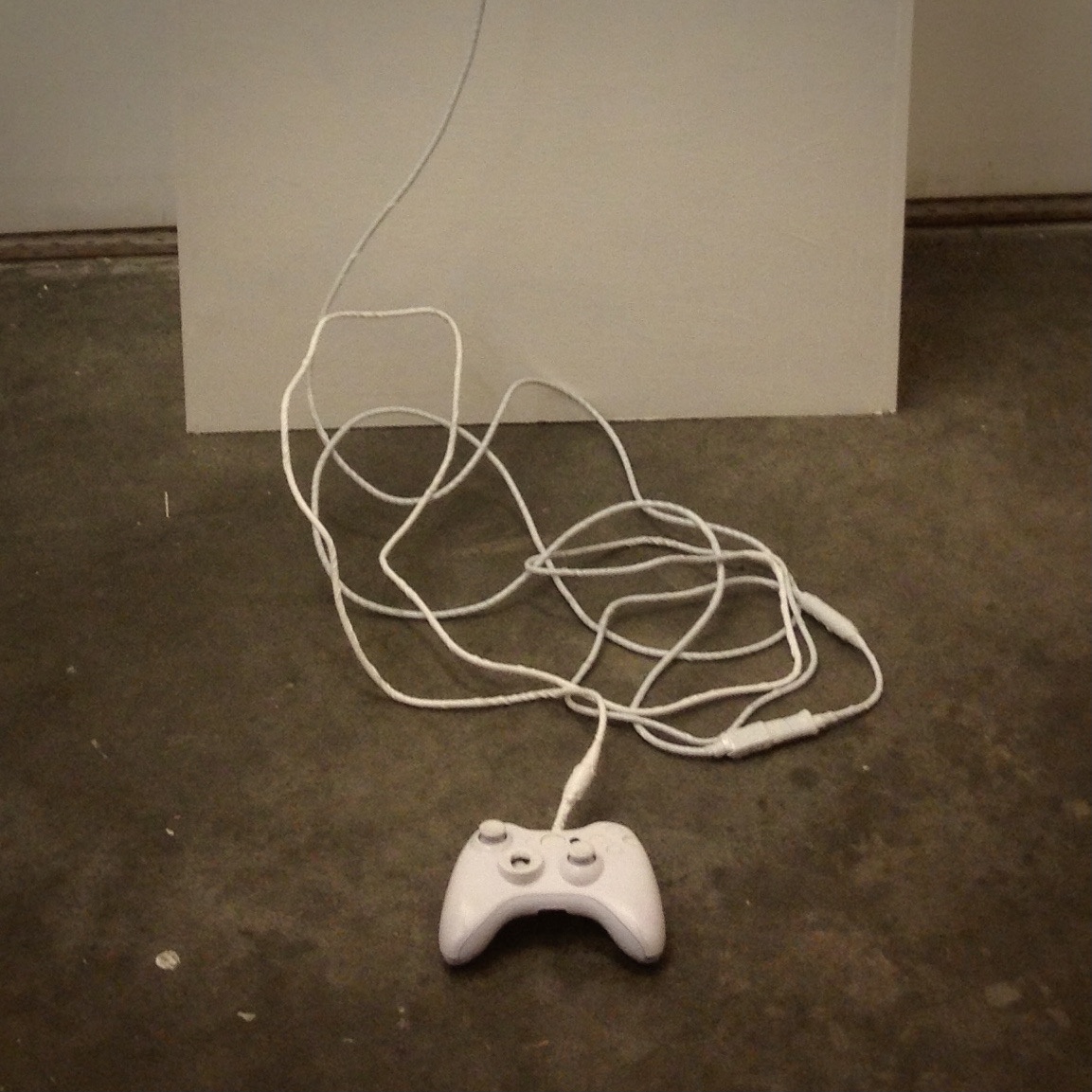
Aumission is an audio soundscape , traversed using a customized Xbox controller.

Interleaving historical 8-bit audio and realistic quadraphonic sound, the participant is invited to explore the narrative in an nonvisual game.

#Cartography #Illustration #RPG

Another old map for Kobold Enterprises. From around 2011.

The value of voice acting in games.

In my work with both game development and contract animation, I often find myself in a position where I have to argue for paying for voice acting. For some reason, clients seem to feel that voice acting is something anyone can do (“can't you just do it?“), or that it's an easy skill (and therefore shouldn't be expensive).

Conversely, I've met quite a few people wanting to be voice actors, and expecting to get work just because they have an USB microphone and a laptop.

Good voice acting is difficult. And it's totally worth the cost.

I was just reminded of this by the game Gun Monkeys from Size Five Games. The game itself is a pretty cute competitive side-scroller about flinging monkeys into the future. They brought on The Actor Kevin Eldon to narrate the game. It was a great move — his voice takes the game to a new level, adding personality and charm throughout.

The Commons splash

A small game about ruining everything good
#Games #Original Games

During my Game Design and Play class, I'll often set an in-class assignment to design a game. These assignments come with restrictions, which I use to try to get my students to think about rules and elements in a different way. I also take up the challenge, and sometimes I get something I really like.

This last week the assignment was to make a game using a standard deck of cards, with the face cards removed. Here is what I came up with. I think it's pretty good.

The Commons Rules