Lucas Haley

Just a personal website.

Handmade family gifts.
#Nonsense

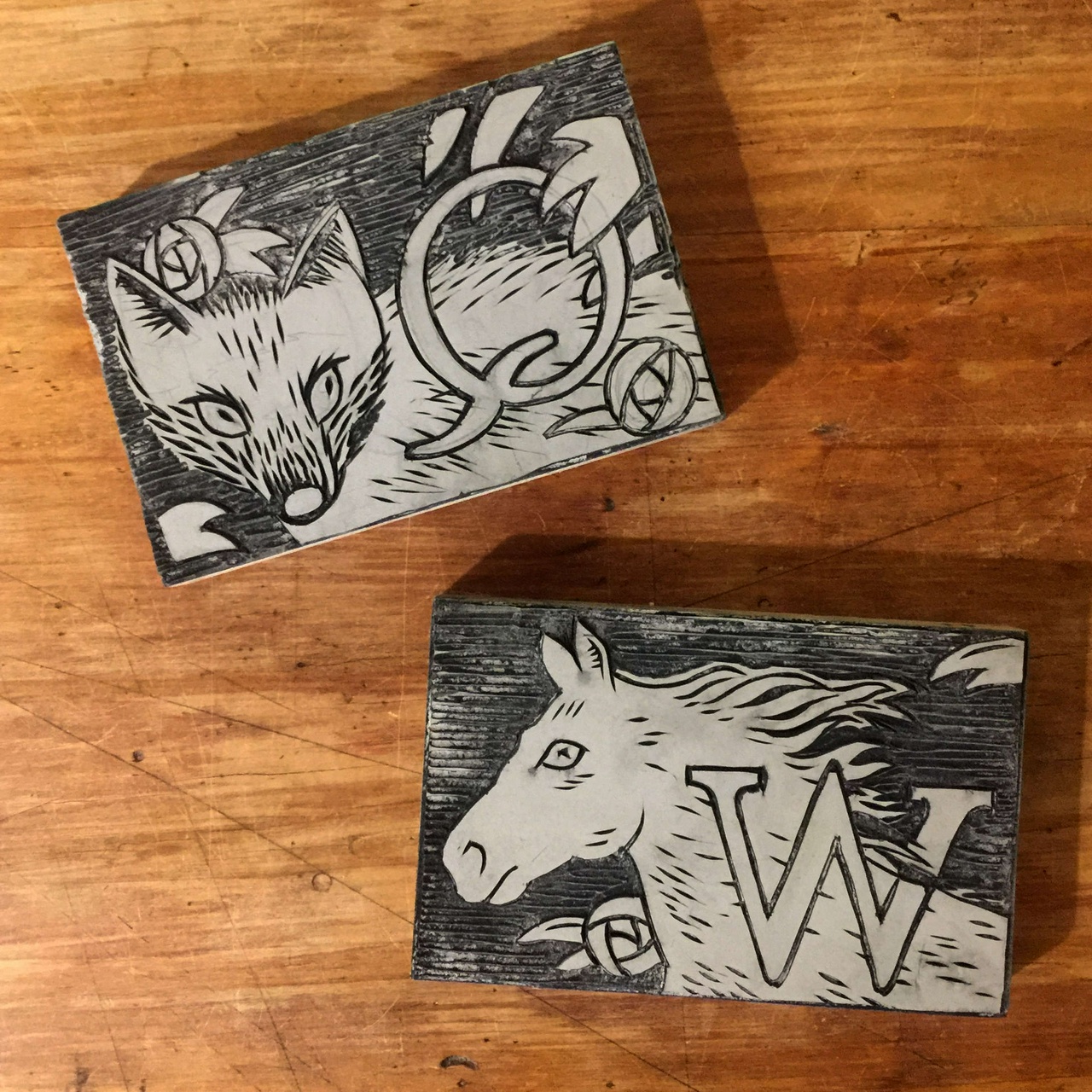
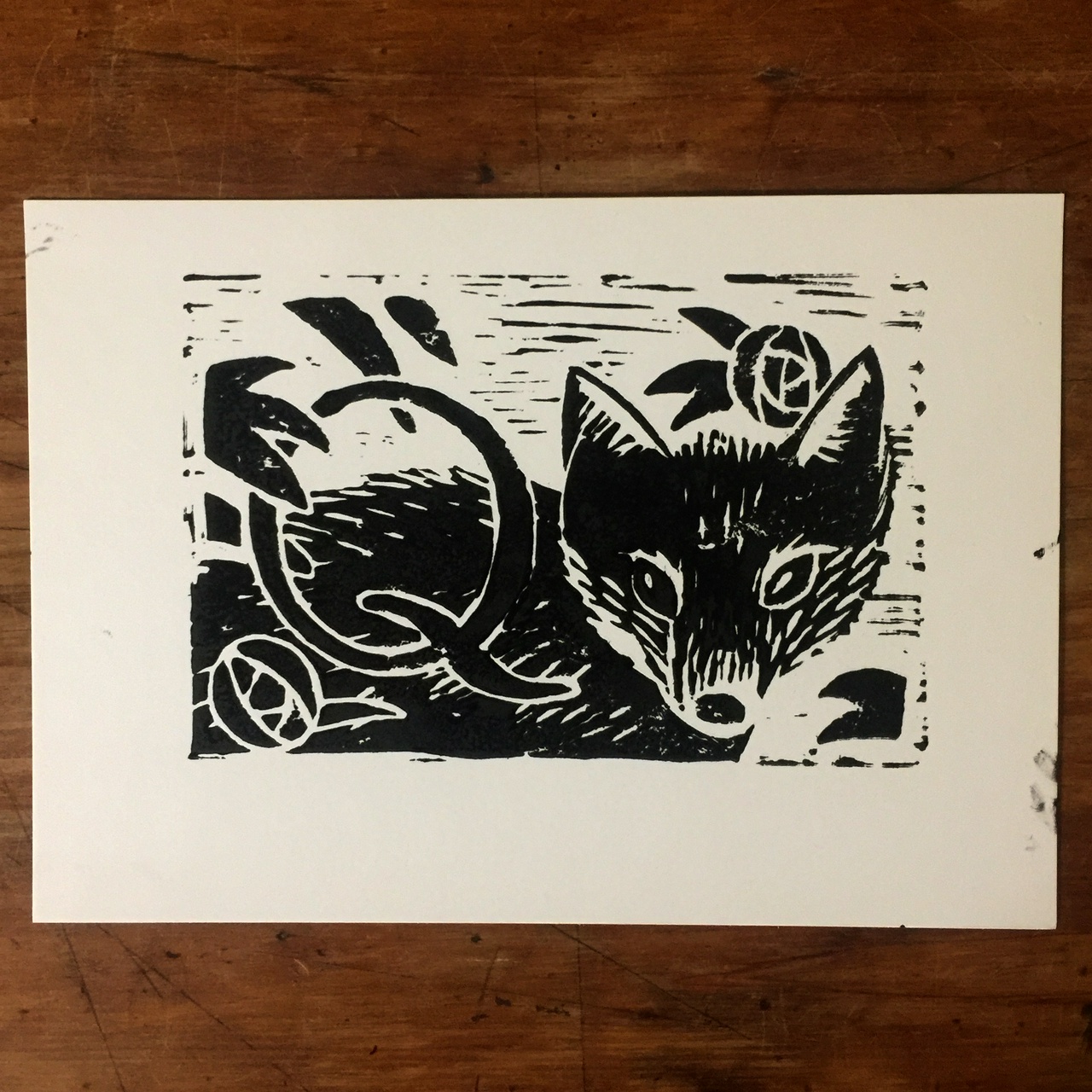
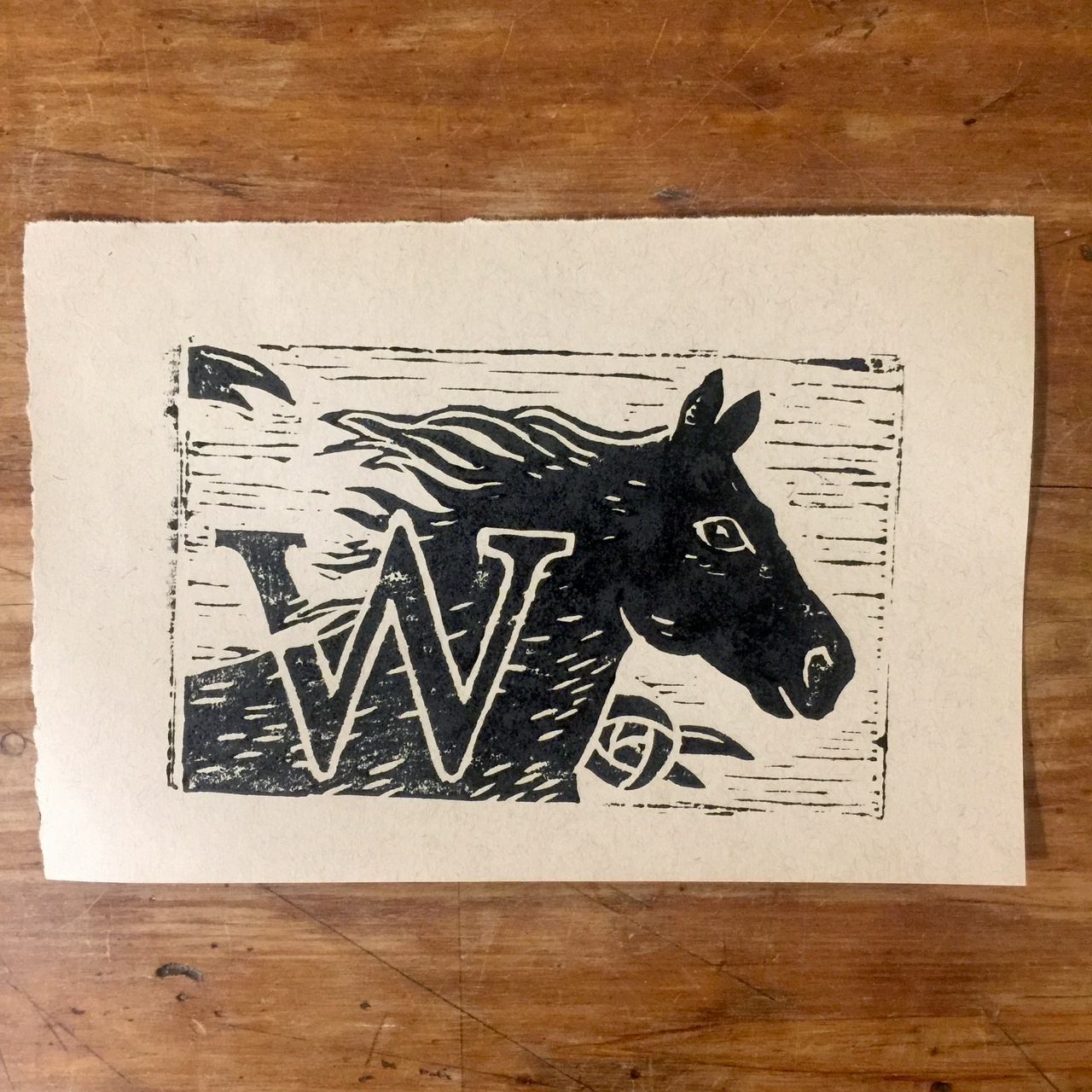
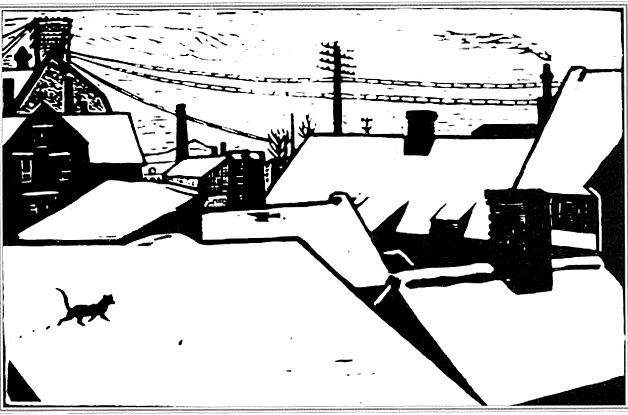
As I mentioned earlier, I made some linocuts for my family for Christmas this year. They proved to be multiple presents in one – the activity of printing, the artefact of the print, and actually the artefact of the lino is also very appealing.

Anyways, here they are.

More on agreement.
#Programming

Development

In setting out on this project, I wanted to meet a couple of secondary goals: to actually complete a web app, and to have an overarching strategy and result for the project. I needed to make sure I could see the end result from the start, and that meant being very deliberate and measured about how to make it.

Framework

For the site I chose to use Ruby on Rails. It's a Ruby-based framework that was quite popular in the late 2000s and early 2010s, but maybe lost some popularity over the last few years. I love it — it's an elegant framework, and I appreciate the level of thought that goes into it. The convention-over-configuration mentality suits me.

Ecosystem

A web app is great and all, but these days that web app needs support from social media. That meant setting them all up.

Hosting

I host a bunch of sites using Dreamhost.com, including this blog. It's pretty good, but sometimes hosting Ruby on Rails sites can get awkward and difficult. So for this site I decided to give Heroku.com a go. Heroku is a cloud-based, platform as a service (PaaS) for building, running, and managing apps. It's got really solid support for RoR, but comes with some functional overhead — namely, using Postgres databases, and tight Git integration. I've used Git before (it's not my favourite version control), but never Postgres. So it was a learning curve for sure.

UX & Design

Oof. I just jumped into the design of the app as I built it. It went through many, many changes as I did. Which I think is a good thing — even though it might not have been the fastest method, I effectively had several rounds of user testing just through development.

Sharing

Naturally I wanted the process of sharing these statements to be as easy as possible. One click. But it was not to be — certainly not with the moving target that is social media API compliance. Image sizes change, API calls change, oof. And what I assumed would be simple functionality — rendering out text to a fixed-size image — proved anything but. Many lessons learned there. But it works — at least, enough for a first version. More planned.
Social Media & Responsibility

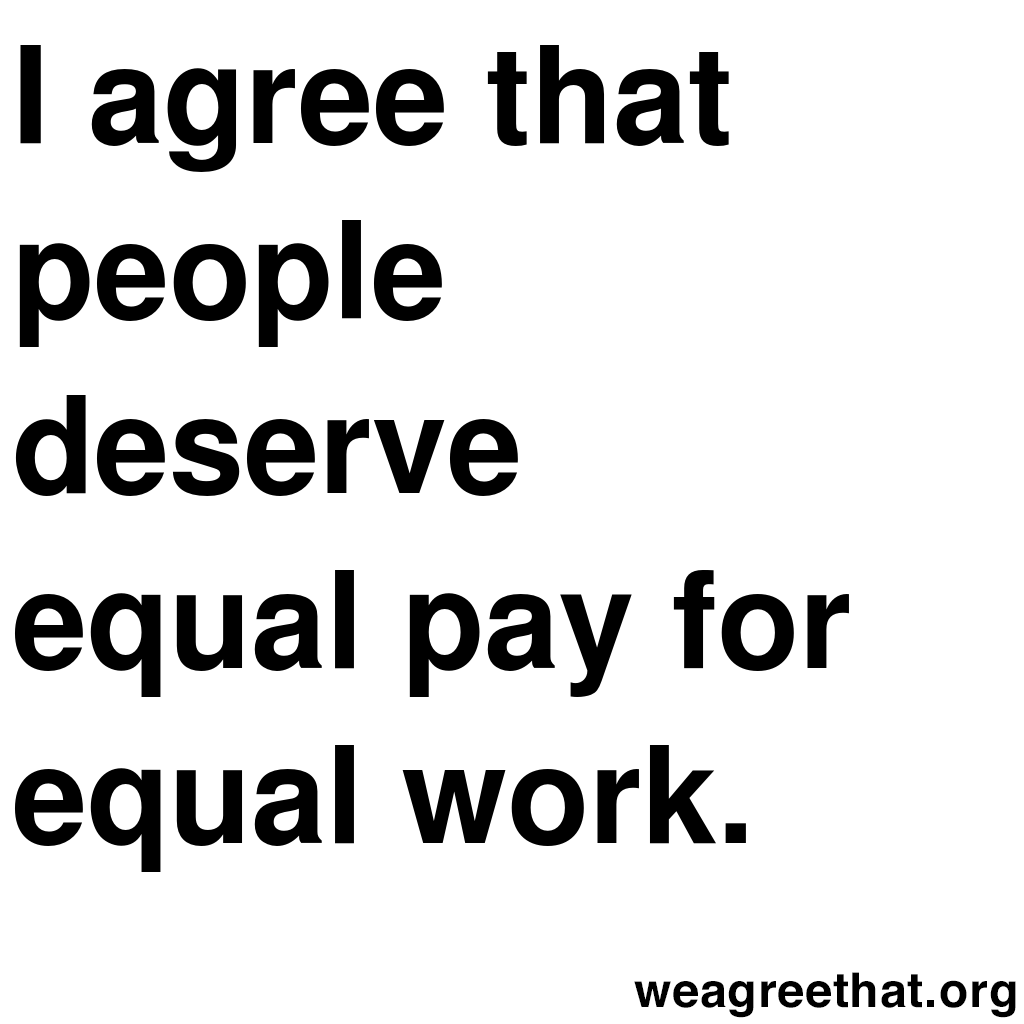
Part of the idea of this site is to ask people to take responsibility for opinions on social media. The current state of sharing allows for individuals to share a post from someone else, yet disavow agreement if confronted, to say “oh, I'm just reposting”. But the sharable image generated by We Agree That… explicitly states “I agree” — and that positioning with the first person makes it difficult to repost without taking responsibility. I've been tracking analytics, and there has been some traffic, but I hope that this gets picked up organically. If not, phase II means a more deliberate approach to publicising the site.
A new research project.
#Programming

As Programme Lead at Massey University, I got to a lot of meetings. A lot. And, being honest, it's possible that not all of those meetings need my full attention. So I've taken to getting some concurrent work done.

The main project I've been working on is the website experiment We Agree That. The idea behind the website is that it is a place for positive axiomatic opinion — that is, dense statements that can be essentially agreed with. Much like the Euclidian axioms from mathematics, but for opinions.

A key element to the website is being able to create variants, or evolutions, of those statements. So if you are unable to completely agree with a statement, you can submit your variant that you do agree with.

It's for that reason that users are not permitted to disagree with any given statement. Instead, they are encouraged to create a variant they do agree with.

A big inspiration for this project is the Declaration of Independence. It too sets out a series of axiomatic statements as the basis for a social contract and government: “We hold these truths to be self-evident.”

Please check out the website, and feel free to add your own statements. It's still in  early development, but I'd love to get some user test feedback. Part II of this post will focus on some of the technical issues in development.

#Article

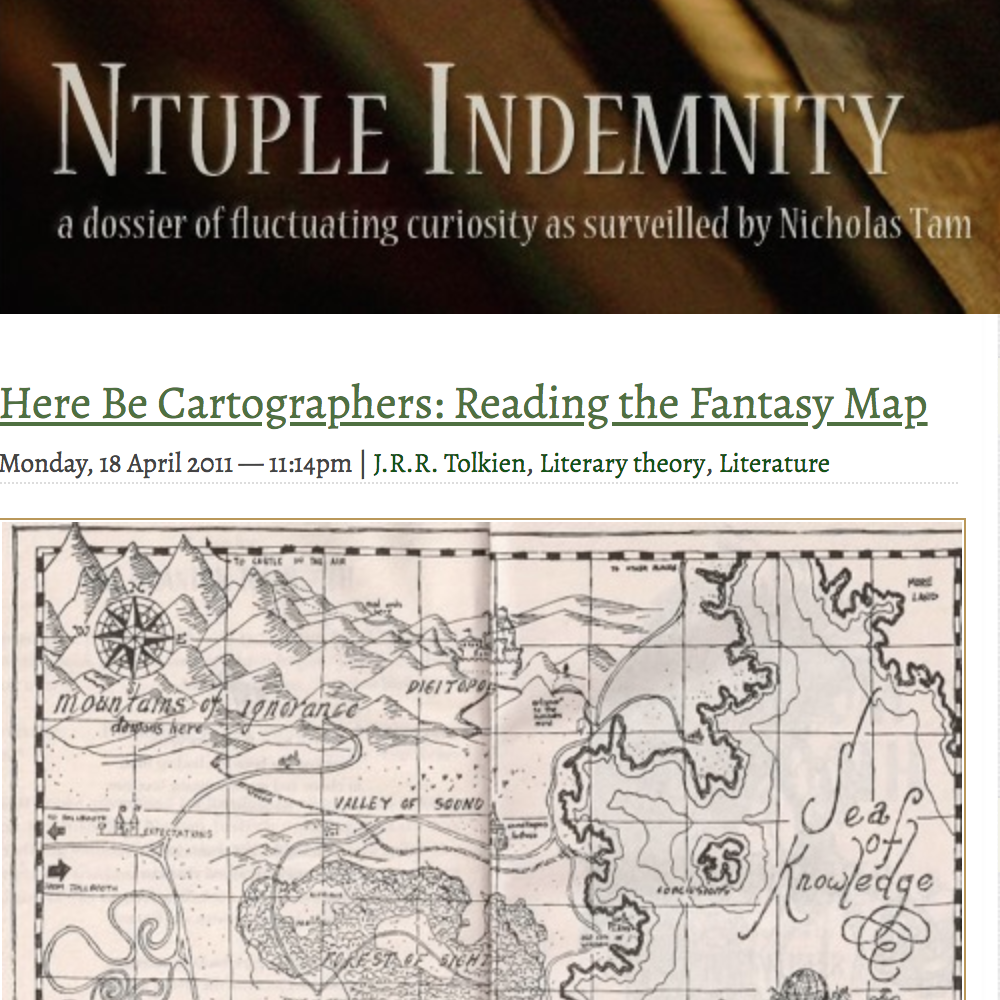
Here Be Cartographers: Reading the Fantasy Map

Really, you don't get web articles better than this.

Update 2023

Looks like the article isn't linking anymore. Thank you, Wayback Machine, for this archive.

Splash

#Artwork

My MFA first year group show, Heavy/Light, took place at the Disjecta Gallery here in Portland. It's a beautiful space, a little off the beaten path, but a great fit for us. My piece, 503558666, is a phone-based experience, mixing modern corporate culture, contemporary art criticism, and classic choose-your-own adventure games. 5035586666_02.jpg Creating it was grueling — overall, it has over 60,000 words, including narrative branches that are only accessible at certain times, by certain people, or purely by chance. But my intention was to have a depth of interaction that contradicts the flat, minimal visual presentation; so I really needed to push the content. I'm glad I found a good text-to-speech system, because attempting to record all the narration would have been insane. Me_Phone-300x225.jpg The piece evoked some interesting reactions. Some didn't know it was a phone number to call, some chose not to call at all. Those that did spent anywhere between a couple of seconds to 47 minutes of time with it.
Just some character doodles
#Illustration #RPG

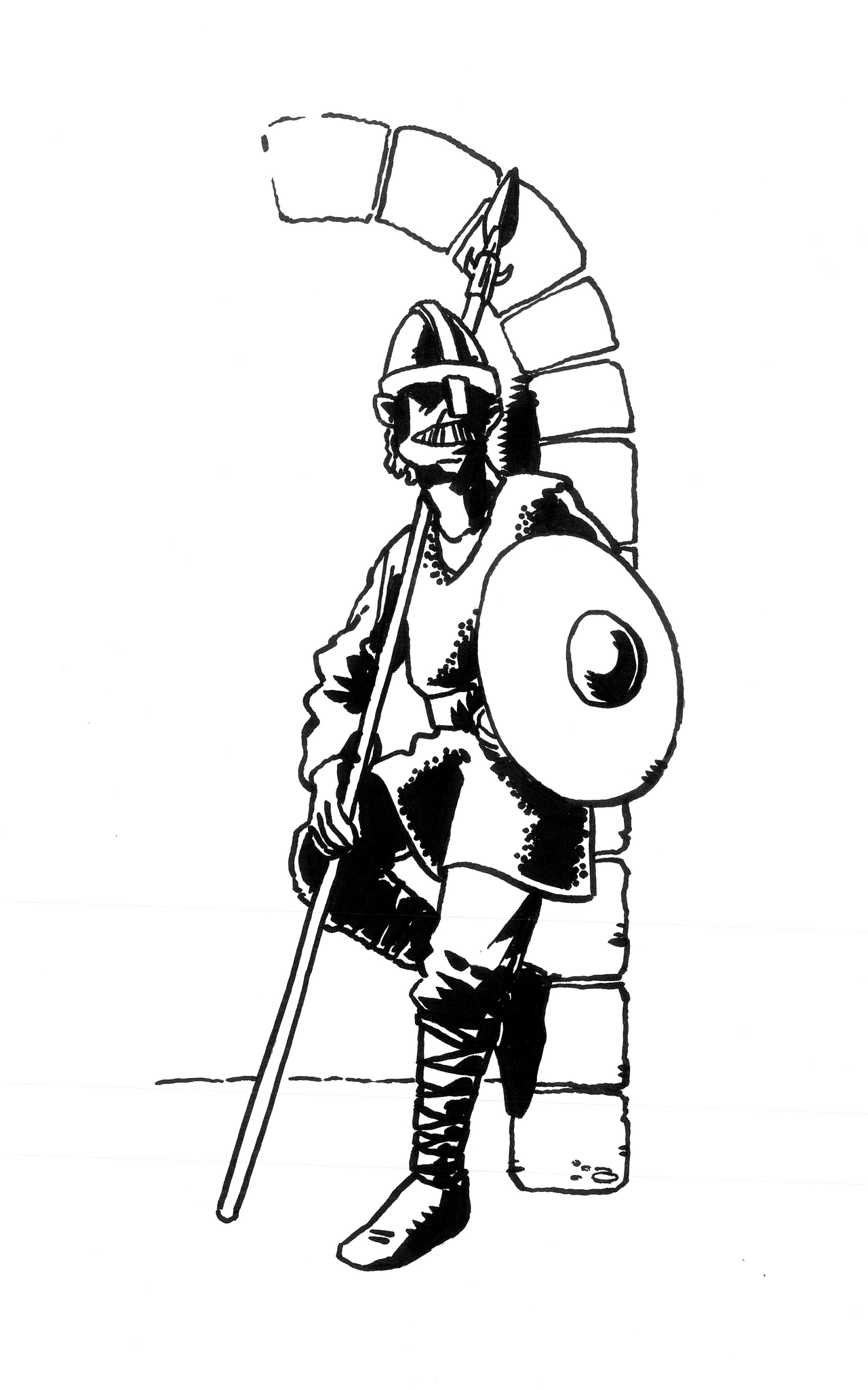
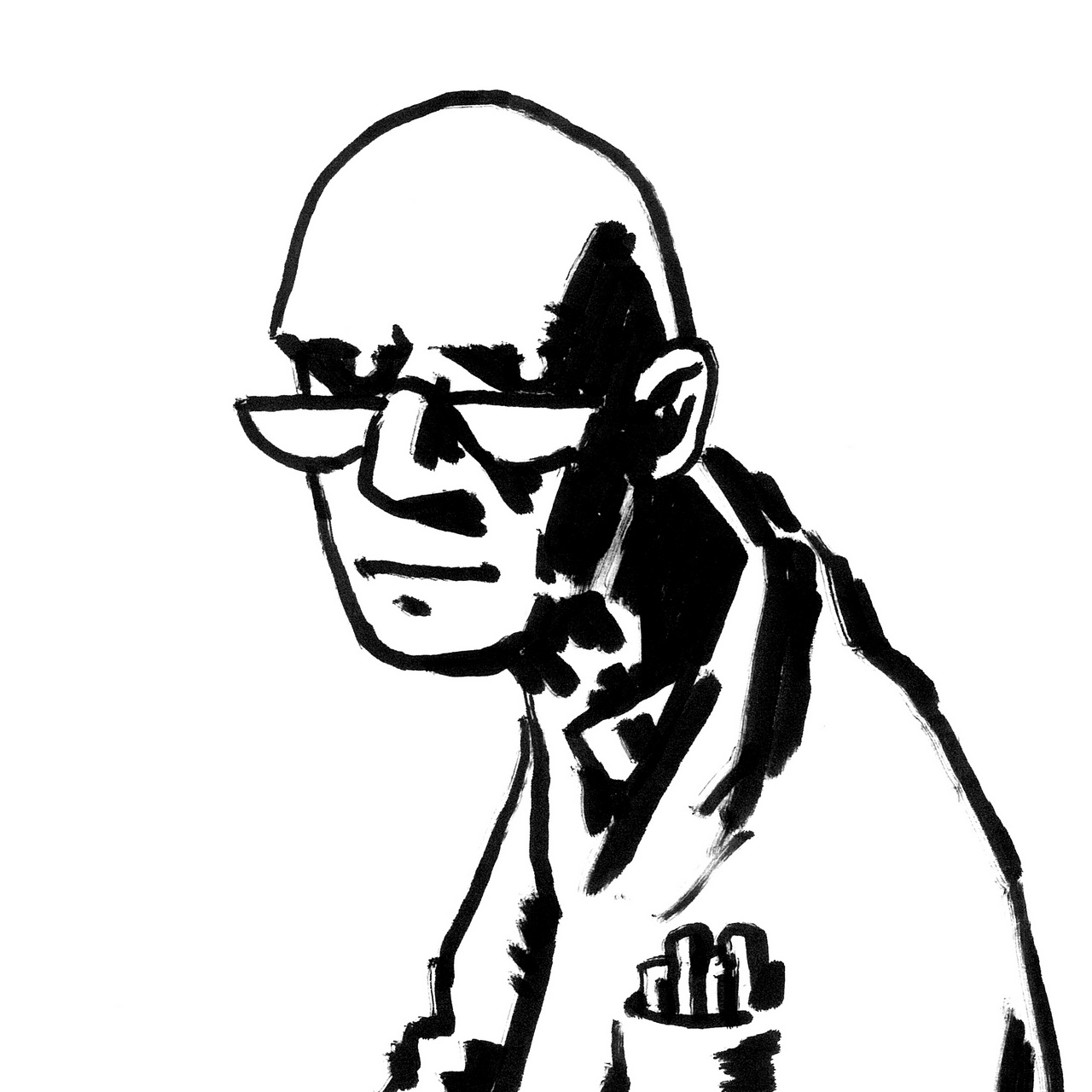
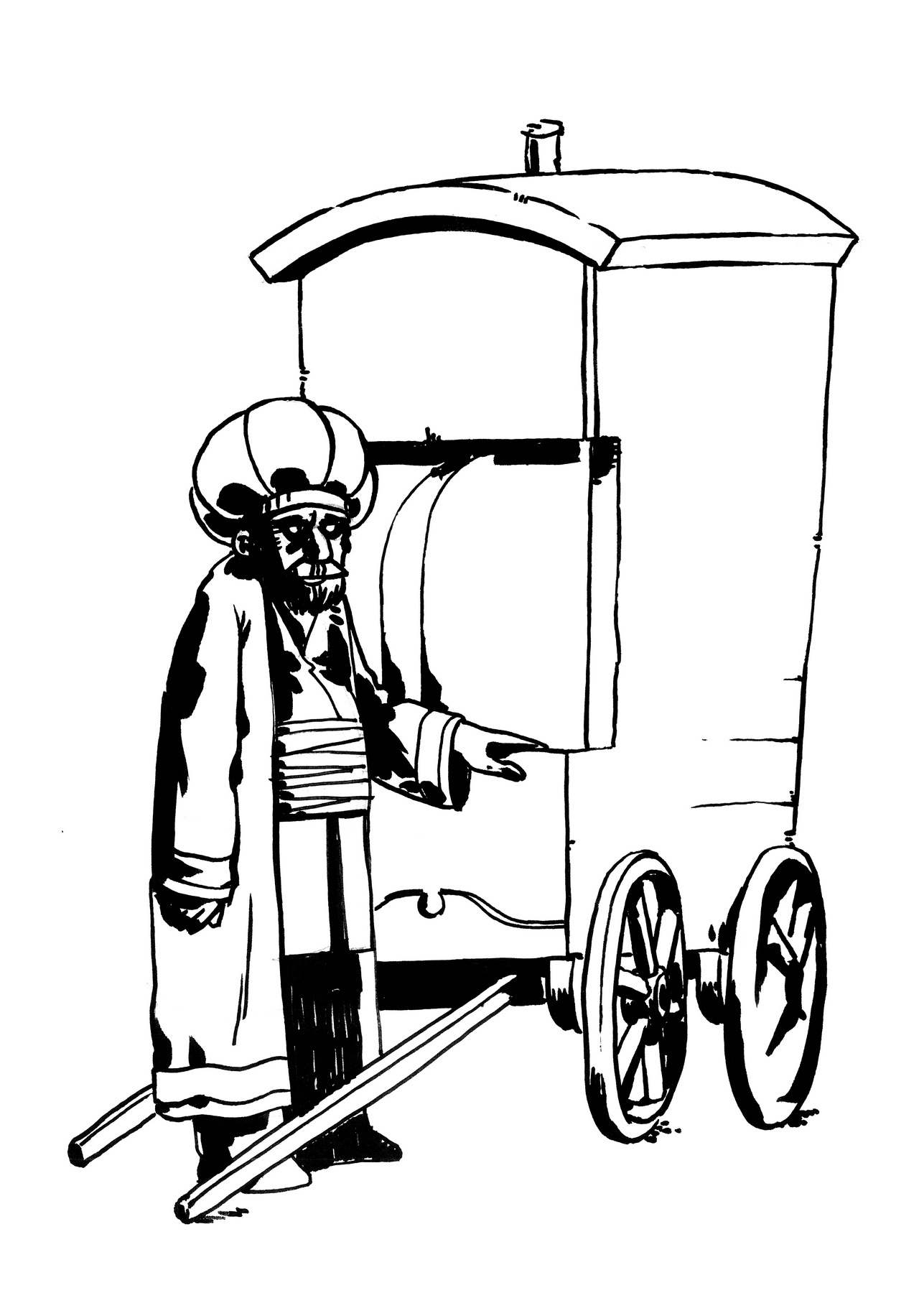
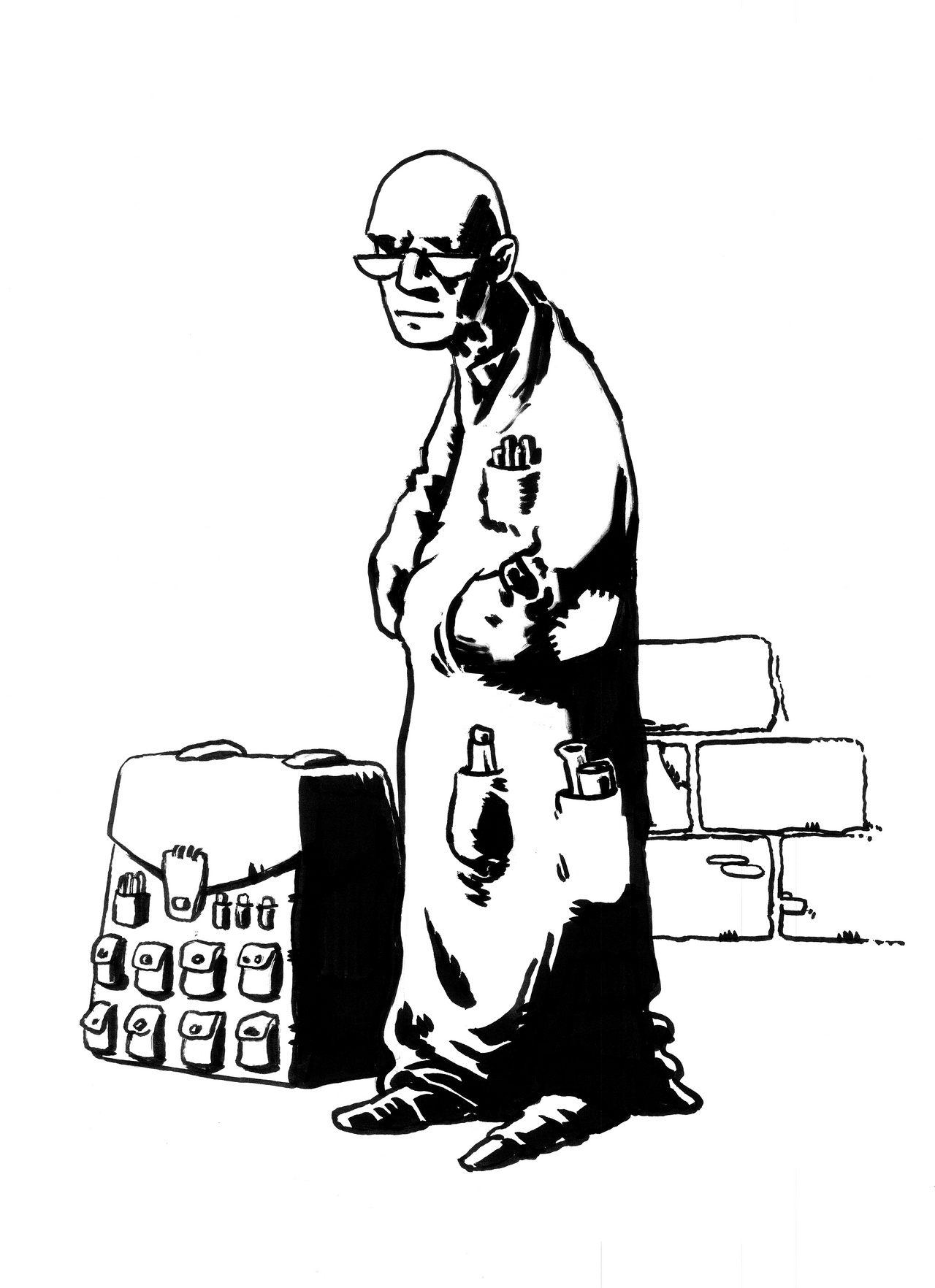
I'm a big fan of the RPG Dungeon Crawl Classics, which has a really engaged group of players. Every year, a bunch of people get together and make a free zine called The Gongfarmer's Almanac, filled with all sorts of goodies.

This year I've thrown my hat in the ring to help out. I don't have a lot of free time, so the work I did tended to be sketching on the bus or in meetings. The work ended up being kind of rough and high-contrast, which I feel matches the DIY photocopied zine vibe.

Aotearoa is ripe as a setting for Call of Cthulhu games.
#Aotearoa

I've been living in Aotearoa New Zealand for about two and half years now. It's an amazing place. I've been learning about the country, the people, and its history. It's a complex place, filled with contradictions. Much like the US, it was colonized by the British, its indigenous peoples subjugated and their rich cultural and mythological heritage abused. It started to come into its own around the 1920s, after a huge percentage of their population decimated in World War I. In short, what I'm saying is that Aotearoa is ripe as a setting for Call of Cthulhu games.

My rudimentary search of the webs hasn't turned up any existing settings for CoC in New Zealand, which of course isn't conclusive. There is the Terror Australis: Cthulhu Down Under guidebook, but Australia is a very different place than Aotearoa (the similarities in accent and flag notwithstanding). But here's a quick pitch list for the setting:

  • Edge-of-the-world environment
  • Only accessible by long sea voyage in pre-1950s
  • 1920s through present day
  • Complex and deep indigenous mythologies and beliefs
  • Taniwha and Whiro, rivers and forests with personhood
  • Colonial presence, carrying ancient evils into a new land
  • Politics dominated by a treaty, with possible eldritch overtones
  • Last stop on the way to Antartica and R'lyeh
  • Crazy goldmines, dark fjords, and insane geological formations

So I guess the question is: should I write the damn guidebook?

Vive la france!
#Game Design #Games

This post on Snit's Revenge made me ponder about asymmetry in games – both in terms of design and context. For design, I thought it might be cool to create an ongoing list of ways in which a game may be asymmteric:

  • player goal
  • player movement
  • player behaviour
  • board layout
  • etc etc

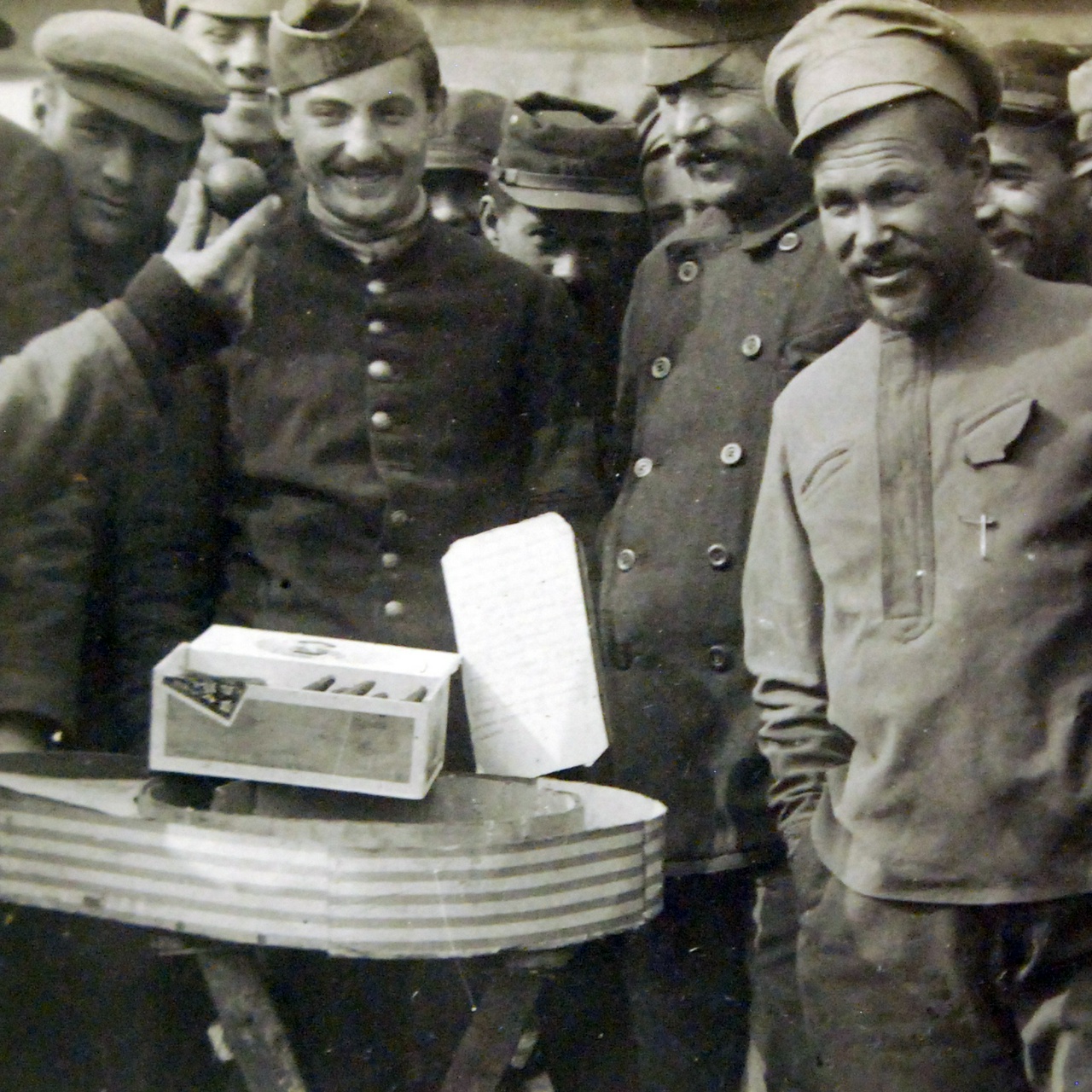
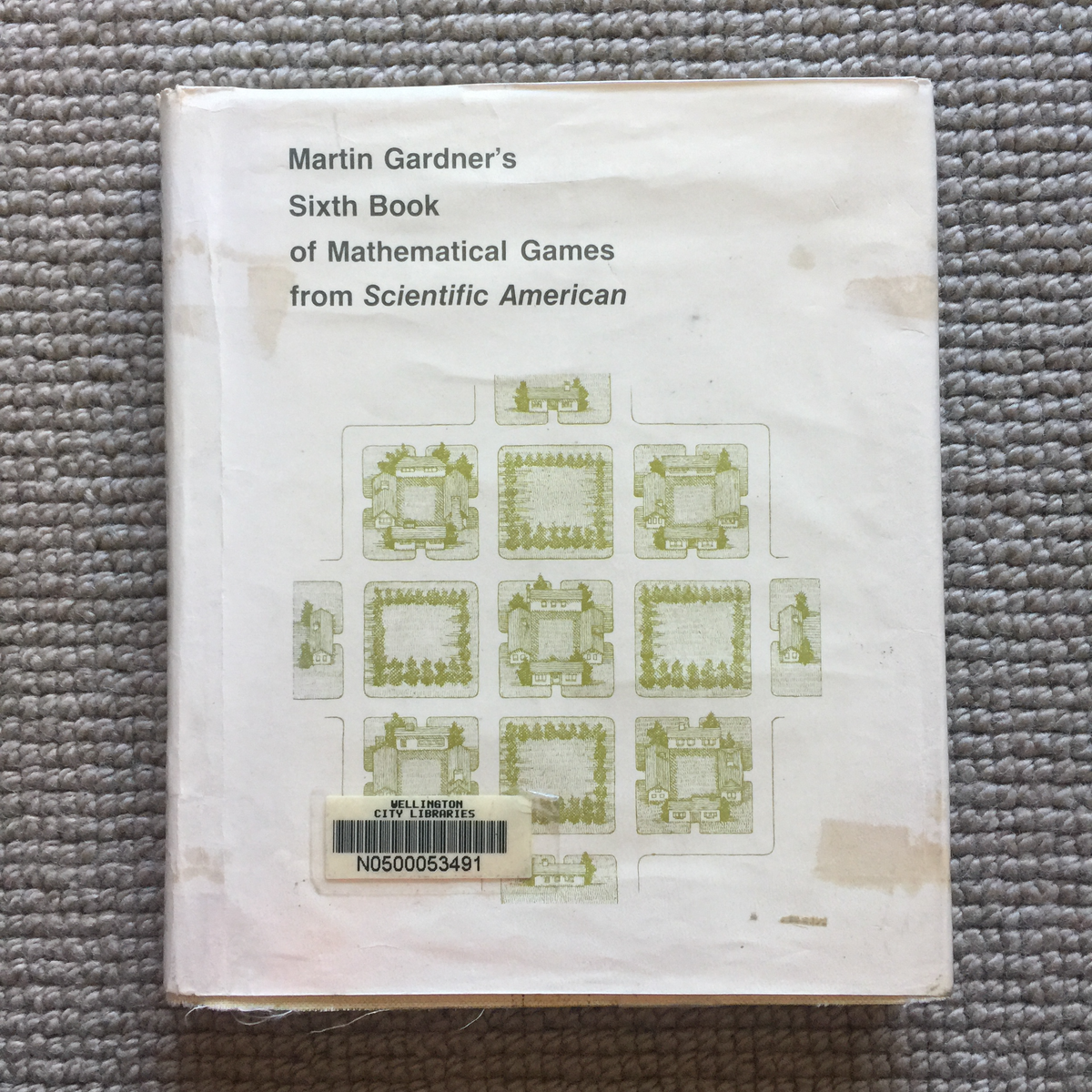
It's another list in my array of Field Notes books. I'll type it up when it's more robust. I was also reminded of the French Military Game. Which is a terrible title for a game, but there we are. It was a game popular with the French Military in the 19th century, more recently written about my the amazing Martin Gardner in Martin Gardner's Sixth Book of Mathematical Games from Scientific American.

The FMG is asymmetric with number of player pieces, player movement, and player goal[^1]: The three white pieces can move sideways, forward, or diagonally forward; the single black piece can move in any direction. The white pieces want to trap the black so that it cannot move, and the black piece wants to get past the white (which cannot move backward).

The FMG sits in the set of “Hunt Games”, where one player is hunting the other. By their nature, hunt games are asymmetric in at least one way. Other traditional hunt games include:

  • Bagh Chal and Bagh Guti, from Nepal
  • De Cercar La Liebre, from Spain
  • Fox & Geese, from Britain

I'm still on the fence as to whether I would consider hnefatafl a hunt game. But that's just semantics – it's still asymmetric in player movement and number of player pieces. But hnefatafl deserves a whole post unto itself really.

[^1] not so sure about asymmetric goal in this game. It's more of a mirrored goal.

Splash

Early gaming memories and asymmetry

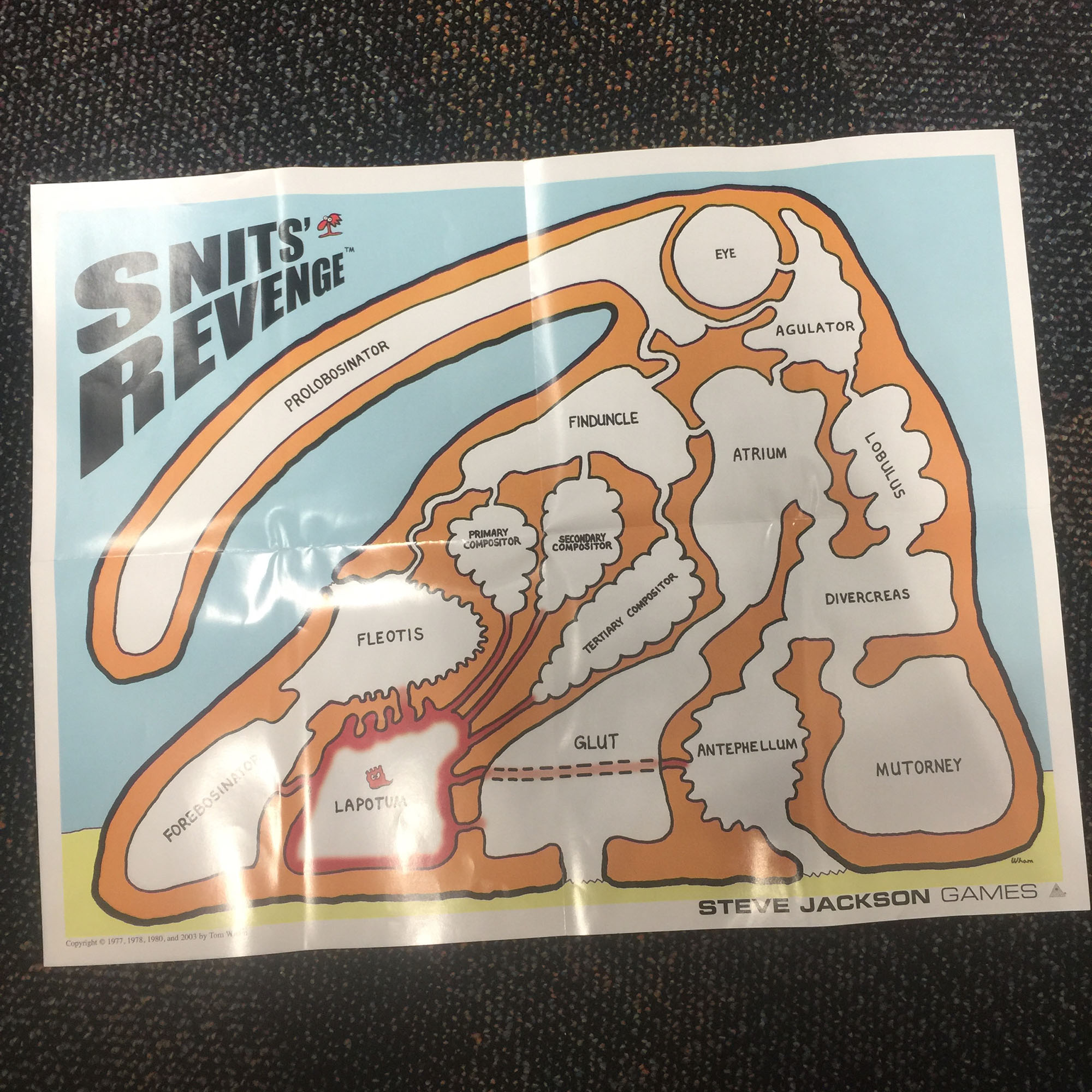
The earliest memory I have of playing board games isn't with Monopoly or Chutes and Ladders. It's with Snit's Revenge. I have no idea how we got this game – whether my parents were somehow possessed to get this bizarre game, or one of my older brothers picked it up – but I have distinct memories of it. I mean, how could you not? Look at this board:

Snits_02.jpg

The photo is terrible (and for that I apologize), but just the look of it is enticing. Prolobostinator. Labotum. Mutorney. Fleotis. Does this thing have two buttholes? What is going on? As a possible 7-year-old (I don't remember exactly when I got it), this thing was amazing. I played it with my older brothers, and I remember the gameplay being hectic and fun. I just bought a used version, and look forward to trying it as an adult.

But one of the interesting things about this game – from a design standpoint – is how the game is asymmetric. And it still works. Which for a quick game, is pretty cool. Assymmetric game design is when the gameplay is different for each player. So chess, for example, is symmetric – both players play in the same way. Examples of classic asymmetric board games include Scotland Yard and Betrayal at House on the Hill.

The different goals of the game really caught my imagination. But in doing some research into the game, I'm very happy to find out more about the guy behind it. Check this guy out.

TomWham.jpg

Tom Wham's Website OOKland

#Kudos

I've posted before about my high school History of Art teacher, Robert Orme. The other incredibly formative teacher I had at high school was a gentleman named Stuart Dorrian.

He started at the school after me. I remember when he first strode into the room, dropping his leather satchel on the desk and confidently calling out “Alrrrrrrrrrrrrrrrrrright lads” in his dense scottish brogue. I had never seen anything like him. And knowing what I know now about joining a new class of kids, his entrance was pure gold.

He taught English. He did it very well. He wasn't afraid of any topic, and challenged us all to be fair, open-minded people. His readings of texts were dense and insightful – I still have vivid memories of working through Graham Swift's Waterland. He was the first person I knew who made talking about homosexuality not a big deal, which for a sheltered 14 year-old, was a big deal in and of itself. He was funny as hell, in a very wry way.

He was also the one teacher to made the transition from grade school teacher to young adult teacher effortless. Even though I stopped having him as a teacher, I would seek him out to say hi when I could. I remember one day – the last of classes for the year – when I went to go wish him a happy summer break. The kids in his class were rambunctiously out of control as they packed up to leave for the year. I asked if he was okay, and without a word he gently opened his leather satchel to reveal a small bottle of whiskey. “Oh, I'll be fine,” he said with a wink.

As far as I can tell, he's now the head of one of the departments at school. He would be awesome at it.

So hat's off to Stuart Dorrian. I would be lucky to be the teacher he is.