Lucas Haley

Just a personal website.

A quick storyboard method for short films and animations.
#Animation #Instruction

As a teacher, I’m frequently working with students to refine their story ideas for short films and animations. I’ve found there are two consistent characteristics of students at this stage:

  • They have not watched enough short films to understand the format
  • Their story ideas are feature films or miniseries

Usually for problem 1 I send them off with a list of films to watch. For problem 2, however, it takes a little more work – dreams of extended character arcs and major set pieces are hard to let go.

One technique I have used recently is to have the students work their story from the inside out. They are used to thinking of their stories as linear, start to finish. Their storyboarding often reflects this – the first few pages (pages!) are detailed and careful, but quickly peter out. The story loses focus, the scene construction gets weaker, the film just trails off into nothing. By working on the boards as a coherent whole, the students begin to understand their story as a whole.

The technique is simple and flexible: board out your story in three (3) panels. That’s it. That’s all you get. Go.

Okay, there’s a little more than that.

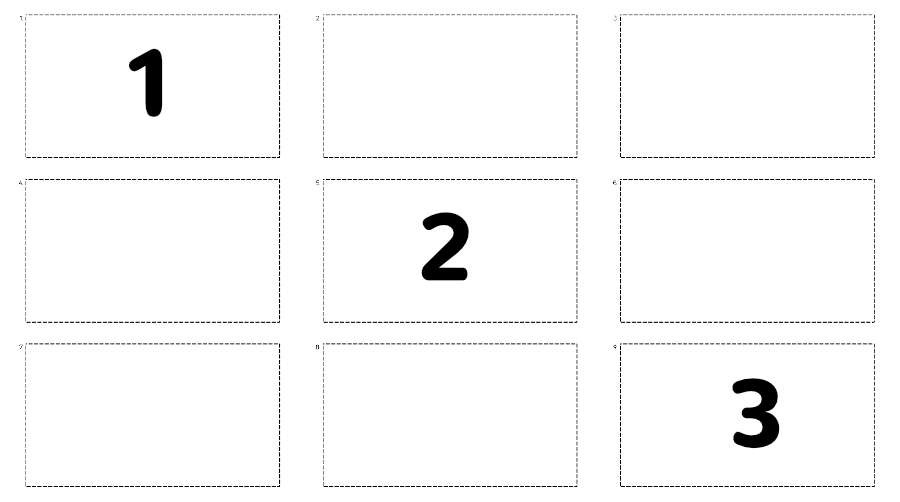
I use 3x3 templates from the awesome Storyboarder, printing them out in batches.

Then the students follow these steps:

  1. On the first page, they board their story in 3 panels, in 3 different ways. Each row has to be significantly different – students can play with time (i.e. which part of the story to include) and space (i.e. framing). Sometimes I get them to do more than one set of three, especially if their story is vague.

This process really forces the students to think about only the main, core beats to the story. When you’re trying to say something in <2 minutes, this is critical. If they can’t, they should save the story for when they’re directors at Pixar and find a new one to tell now.

  1. Students then review their 3-panel stories, and help each other to assess the strengths of each.
  2. Selecting one of the 3-panel boards, the students then take new 9-panel templates and transfer their 3 original panels into the new templates.

How they place those original panels will significantly change the pace of the film. I usually go with two initial patterns:

But there’s no reason you can’t challenge them to re-think their story, like so:
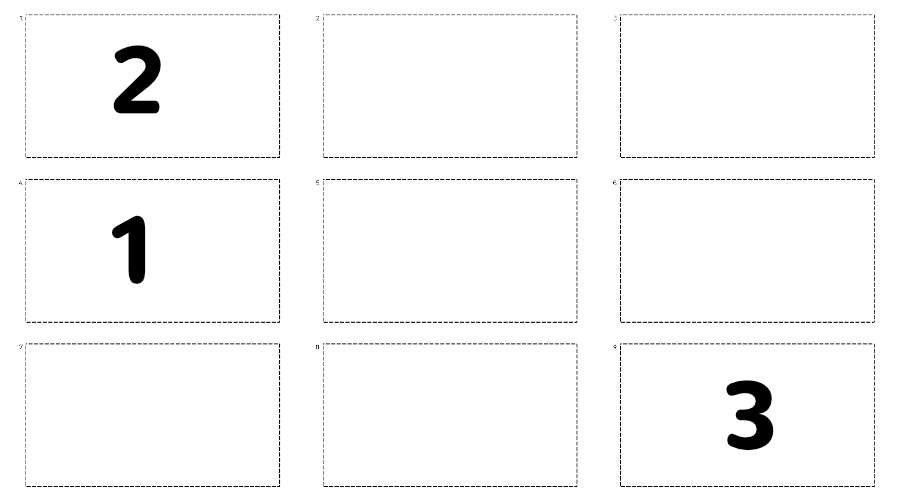
  1. They then draw the extra panels around the original ones, filling out the story.
  2. This process could be extended to larger arrays of boards, but I’ve found this is usually enough to get the students thinking about their story and the limitations of the format.

If you’d like to try it, you can use the wonderful Storyboarder software or print out this PDF:

3-9 Storyboard Template
I mean really, just look at that name.
#Sheep #New Zealand #Aotearoa #ScientistsWithCoolNames #Science #Nonsense

I think one of the interesting side effects of being in New Zealand during Covid-19 is that people are looking closer to home for everything – at least in Aotearoa, where we're in a small Covid-free bubble of our own. So here's another homegrown scientist!

Dr. Ngaio Beausoleil also works at Massey University, but unlike me at the artsy Wellington campus, she's on the agri nexus of New Zealand, Palmerston North. I found out about her work while researching for my suspended Herdr project, and have continued to be in awe of her research output quality and volume.

A ngaio is a lovely kind of tree endemic to Aotearoa. It looks like this:

She shares the same given name as Ngaio Marsh, New Zealand's Agatha Christie.

Stopping Covid and taking names.
#Nonsense #Science #ScientistsWithCoolNames

This is a special instalment of Scientists with Cool Names: this particular scientist is still alive!

Dr. Erasmus Smit is New Zealand's only clinical virologist. Which, as you can imagine, has kept him pretty busy in 2020. He's on the COVID-19 Technical Advisory Group for the Ministry of Health, in charge of the testing for Covid-19 in the country. He apparently goes by “Ras”.

Also, he's named after one of the most badass dudes in history.

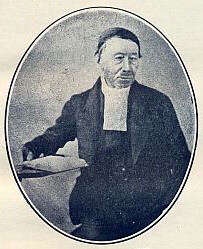
Please note this is a different “Erasmus Smit” than the South African pastor from the early 1800s, seen below. Ras is way cooler. You can tell this Erasmus barely went by “Erasmus”, let alone “Ras”.

nee Kazimierz.
#Nonsense #Science #ScientistsWithCoolNames

Born in Poland, later discovered vitamins. By feeding rice to pigeons. Some of them died[^1]. For you.

[^1]: brown rice is better for you than white rice.

Known for using spectroscopy to determine the rotation of galaxies, and for being terribly cavalier with his neckties.
#Nonsense #Science #ScientistsWithCoolNames

Known for using spectroscopy to determine the rotation of galaxies, and for being terribly cavalier with his neckties.

And only a passing acquaintance with the concept of a smile.

Is your logic as strong as our logic?
#Card Games #Review

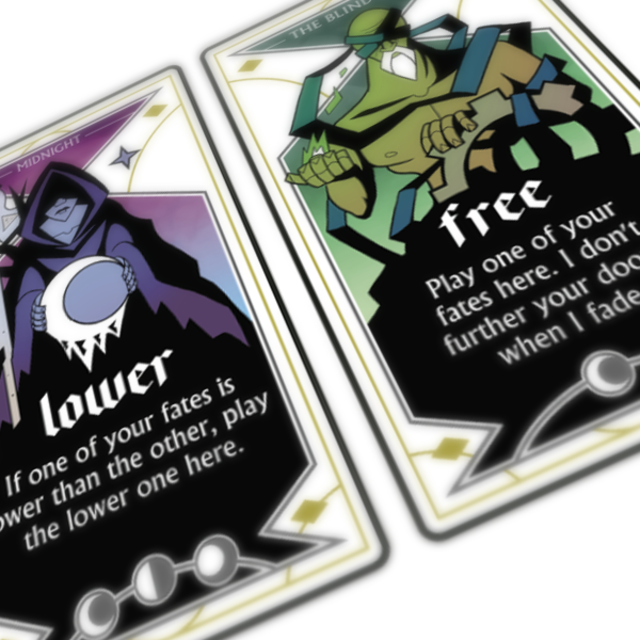
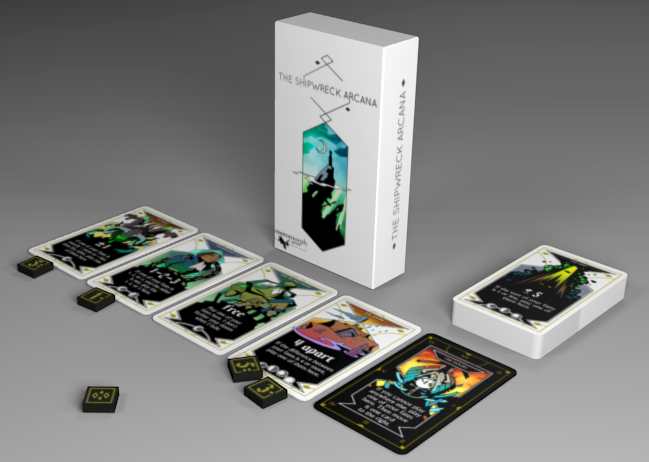
The Shipwreck Arcana is a card game of deduction and teamwork, from Meromorph Games. I picked up the print and play version of it while doing some research for next semester's game course, and sat on it for a while. I was initially taken by the artwork – a cool Mike Mignola-style take on pseudo-tarot cards – but the instructions weren't great.

It was only a week or so later that I read through the rules a couple of times, and got it. I know, I'm not the smartest.

It's a cooperative game, in which each individual player is trying to get the other players to guess the number of the chit in the their hand. Wrapped up in a pretty cool aesthetic.

I'm normally not a fan of cooperative games. I find they tend towards the one armchair leader – perhaps it's the particular coop games I've played, that just don't have the strategic options to actually have valid differing opinions on strategy. I'm also not saying that I'm the type of person who takes over a coop game – I tend towards not doing so. Sometimes to the detriment of my enjoyment of the game. Oh, and I also play clerics in D&D.

Anyways! The cool thing about the Shipwreck Arcana is that it's coop, but rotates ownership, so no one person can dominate. Each player takes a turn being the active player, in which they decide between two numbered chits to place onto one of four cards, each of which reveals some information about the placed chit. The other players then need to guess what the other chit's number is.

It's a bit like the bidding round of Bridge, in which the group are trying to use logic and knowledge of the active player to win the game. The active player tries to be as logical and informative as possible with one move, and the other players then try to deduce their move.

I have yet to try the game in a group – I ordered the physical version, and it'll take some time to arrive here in NZ. I'm eager to see how it plays!

Key Mechanics

Logic, cooperation, deduction, personality

Standout Mechanic

How one card has multiple uses through the Doom and Fade mechanics.

A personal note to remind myself
#Unity #Frustration #Programming

I'm a big fan of Unity. I've been using it since version 2. I've seen it go from small upstart, Mac-only, working with other small Mac apps like Cheetah3d, to a behemoth owning a huge chunk of the game dev base, and more. I still use it every day, and teach it in my courses.

Over the last couple of years, however, I can't help but find the name of the company to be just, well… ironic. They're shooting in all sorts of directions, trying to be everything to everyone. More power to them, I guess — except that the different tentacles of the company don't seem to be talking to each other very well. The new packages don't work well with each other. There's no unity of interface, or programmatic approach. It's really sad to me. And makes teaching it so much more difficult.

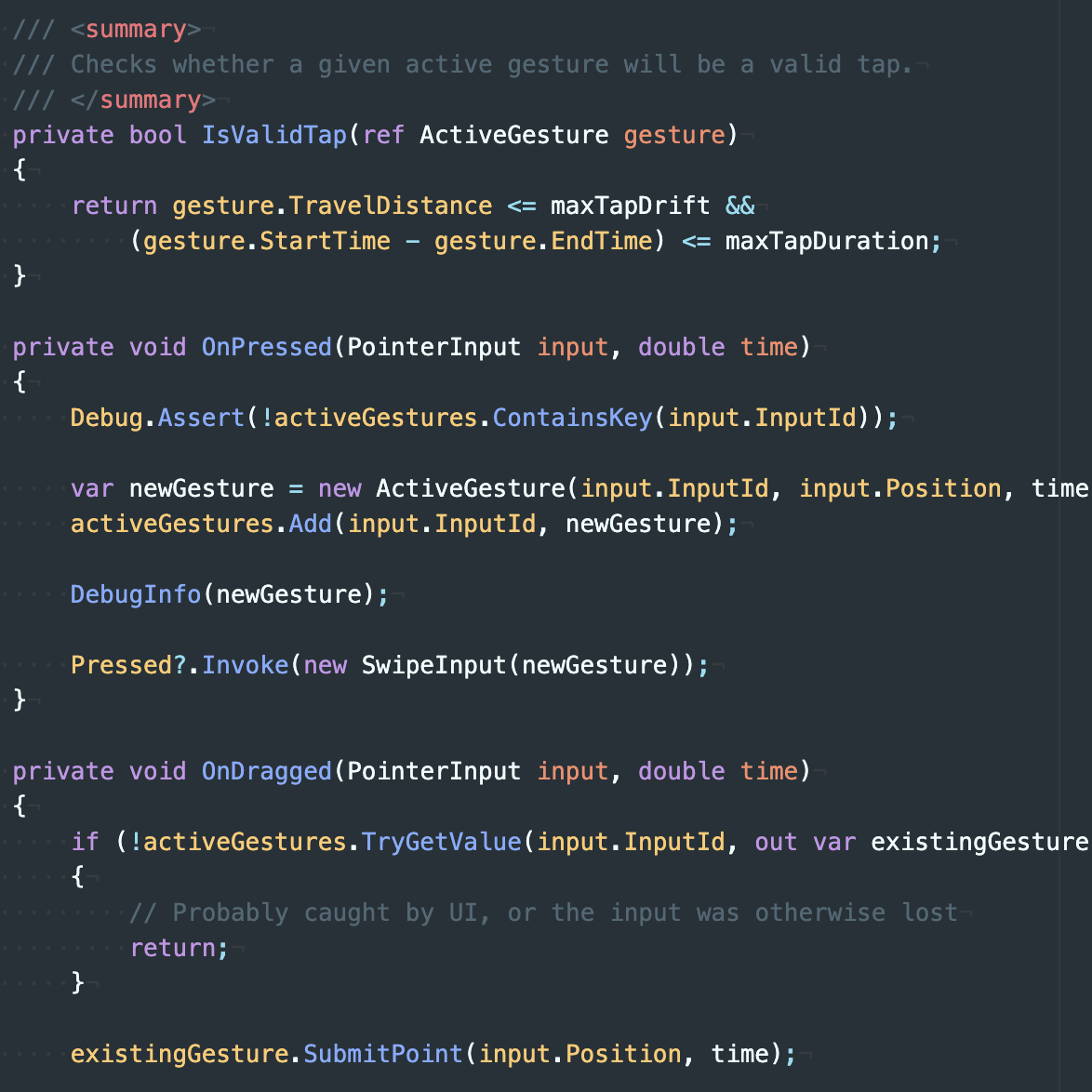
Anyways, I've been trying to pull apart the new Unity Input System. It's a catch-all system for collecting user input, from console controllers to touchscreen devices. As such, it's really abstracted out. Dredging through the demo samples, the code is inconsistent and leverages some pretty obtuse C# techniques, which of course makes it that much more difficult to grok and teach. Anyways. THE FUTURE

Some notes for my own purposes

PointerManager collects raw input. GestureController determines swipes and taps. It assigns its own OnPressed to PointerManager's Pressed method. SwipingController parses gestures for functionality. It assigns its own OnSwiped to GestureController's Swiped method.

Code with your brain, not your fingers
#Frustration #Programming

Sometimes I find myself beating my head against a particular programming problem, trying to force the code, and inevitably it means I'm not thinking in the right way about it. It's like the Blaise Pascal quote:

I have made this longer than usual because I have not had time to make it shorter.

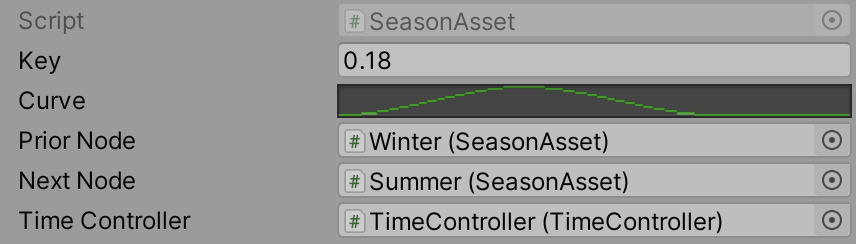
In this most recent incident, I've been trying to code seasonal cycles into a game, in which the various variables could be manipulated per-object, per-season, with custom seasons per-object. Don't ask. Anyways — here I was, beating my head against modulos and switch cases for a day and a half. Then, on a rare run, I got far enough away from the computer to remember that Unity has AnimationCurves, which basically tick all the boxes could want. It took about 14 lines of code to get to work.

It's just a nice reminder that sometimes the best coding is done with your brain, not your fingers, away from the computer.

On using a classic game as a basis for further development.
#Board Games #Instruction #Game Design

In my game development courses, I will often ask my students to take an existing game – blackjack, hopscotch, Jenga – and try to make a new game from those basic rules. It's a common exercise, and quite a good one for beginning designers, as you have a clear and well-defined game rules.

At the start of this semester I asked my student to riff off one of the oldest games ever, Rock Paper Scissors. There are quite a lot of variants, all known as “ken” games, from the Japanese word for “fist”.

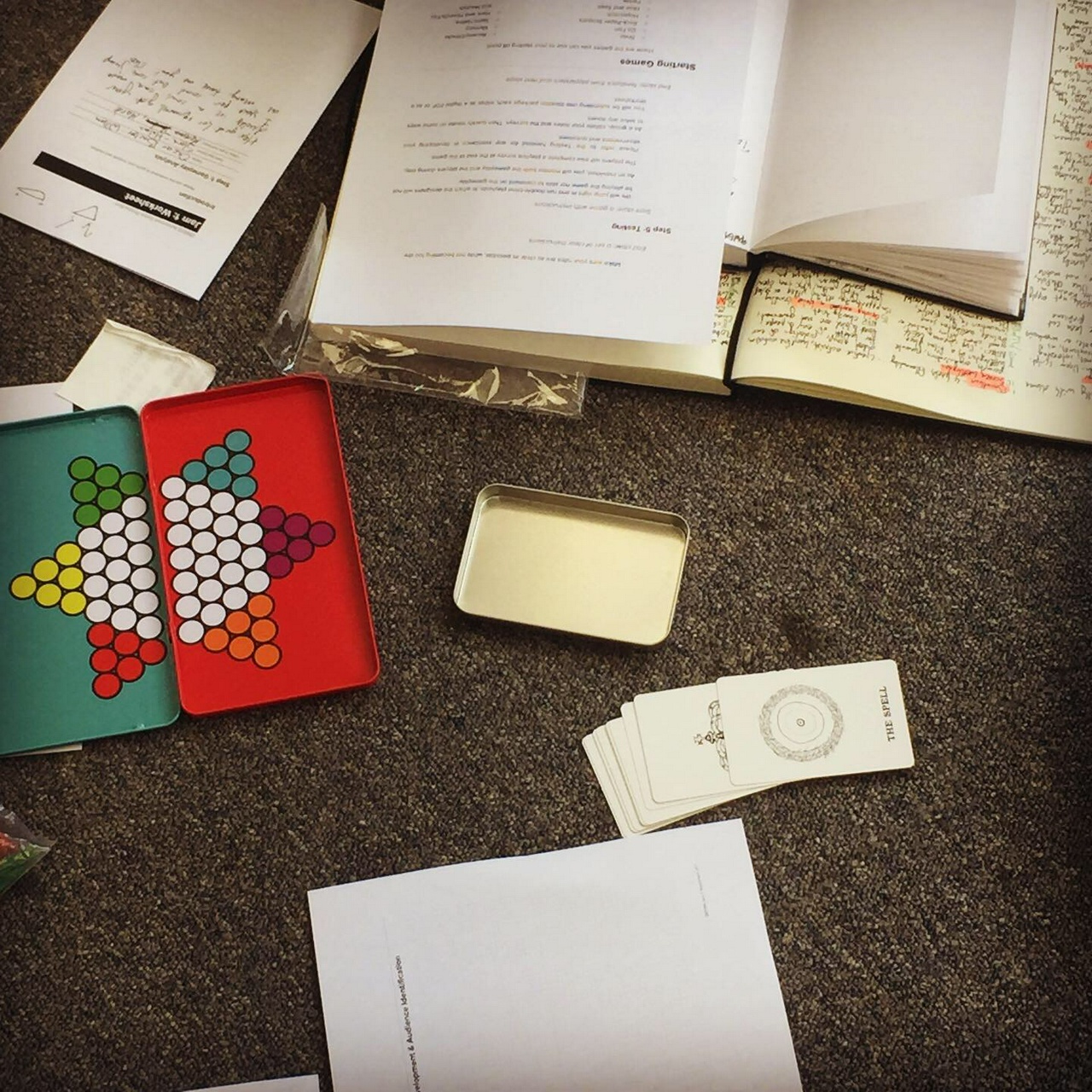
This year, students looted my supply of prototyping stuff – a vault of cards, tiles, dice, tokens, etc. that I use to throw a game together for testing.

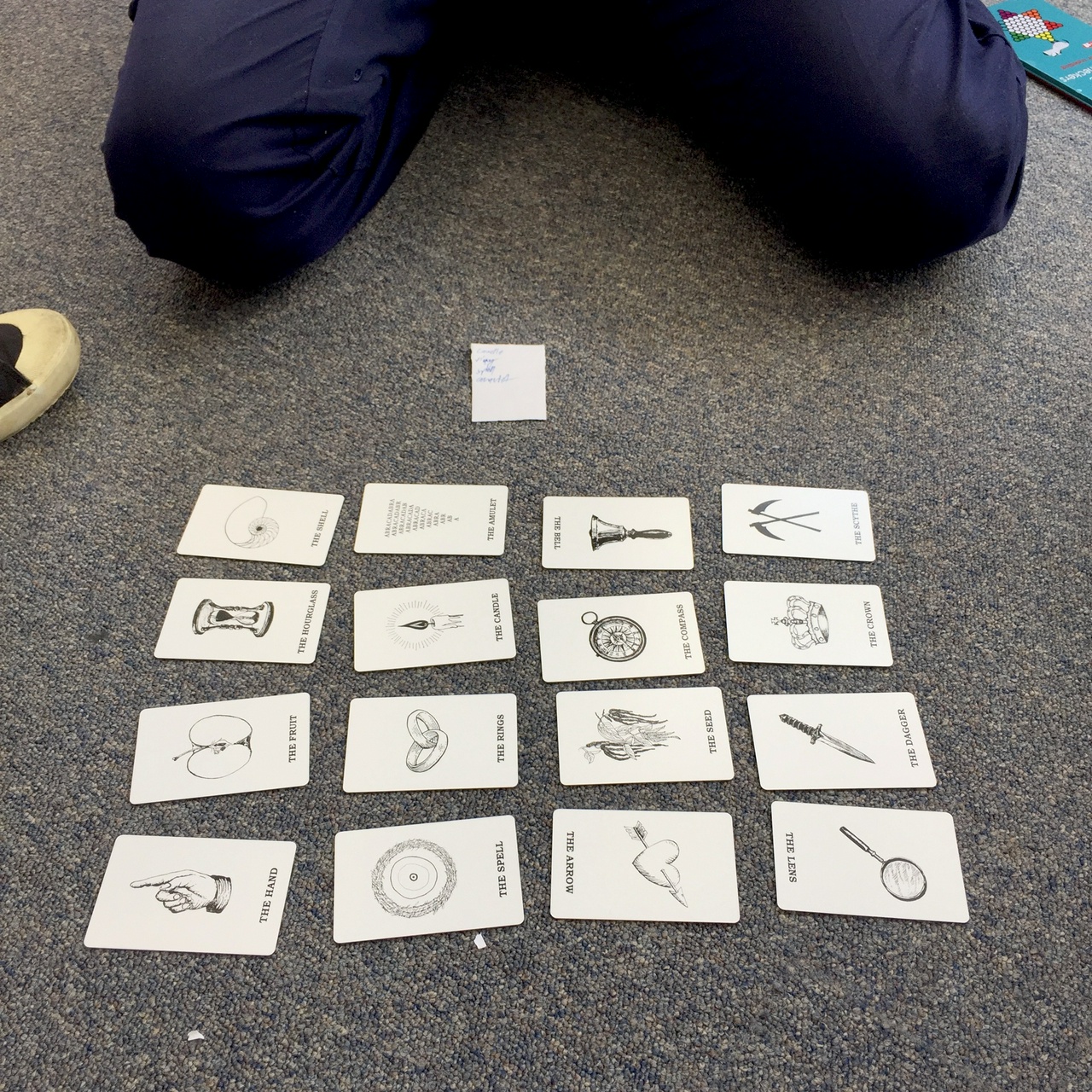
One team grabbed the Personal Oracle deck, a cool deck of loaded symbols primarily used for divination. Their game revolved around memory and card-swapping.

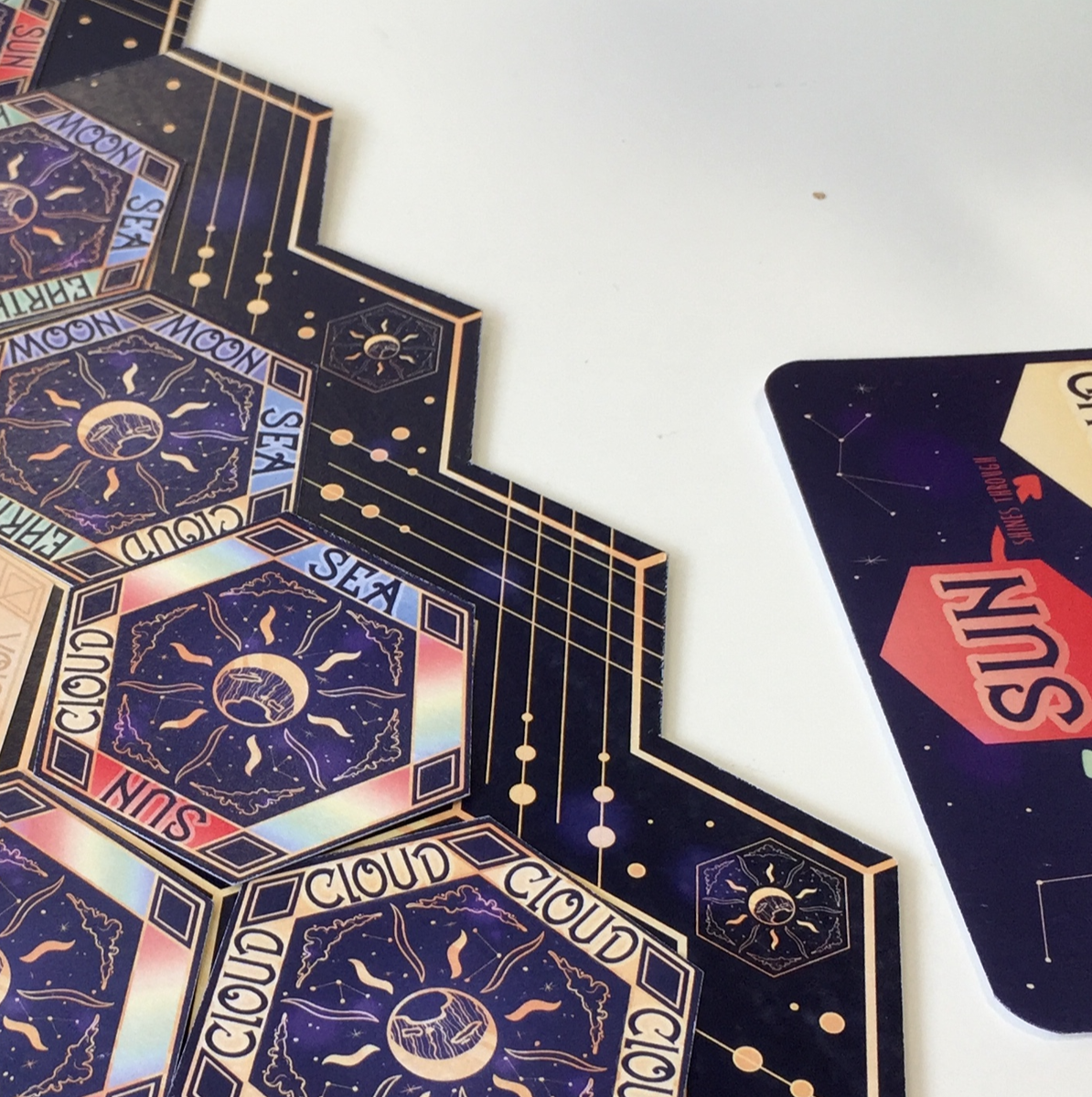
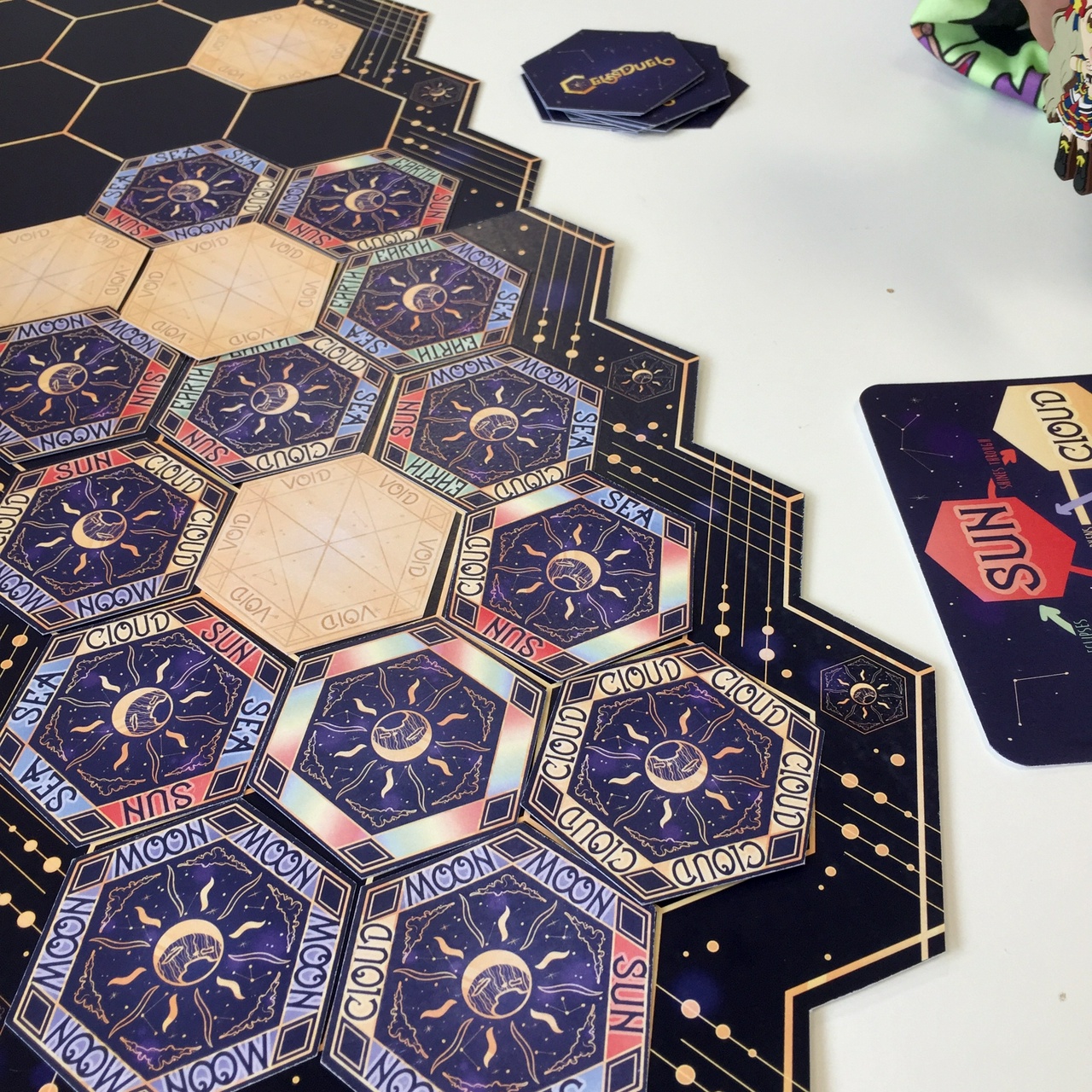
One team gravitated towards the hex tiles. After making a suggestion of corrolating the six sides with the three throw choices, they were off.

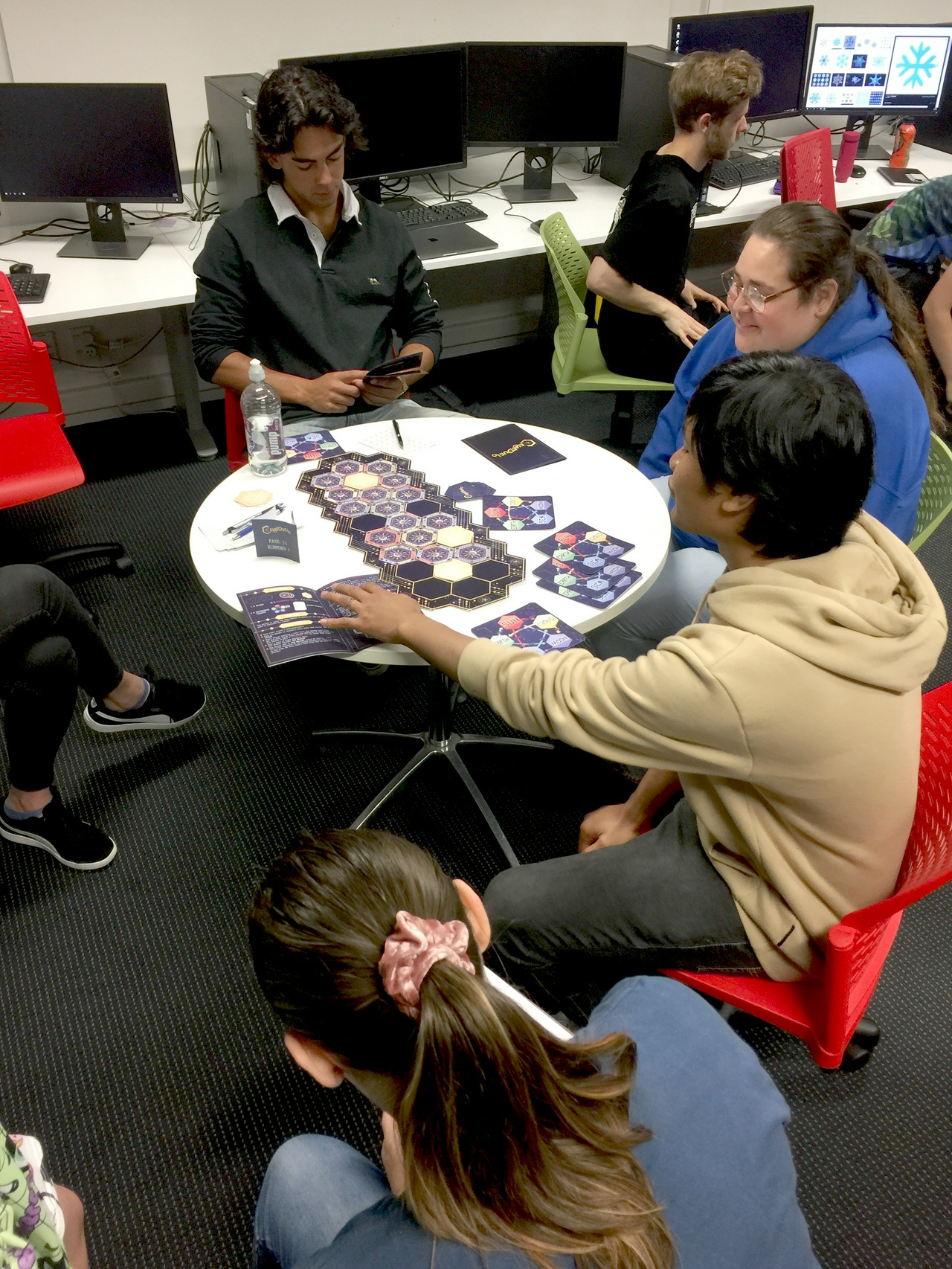
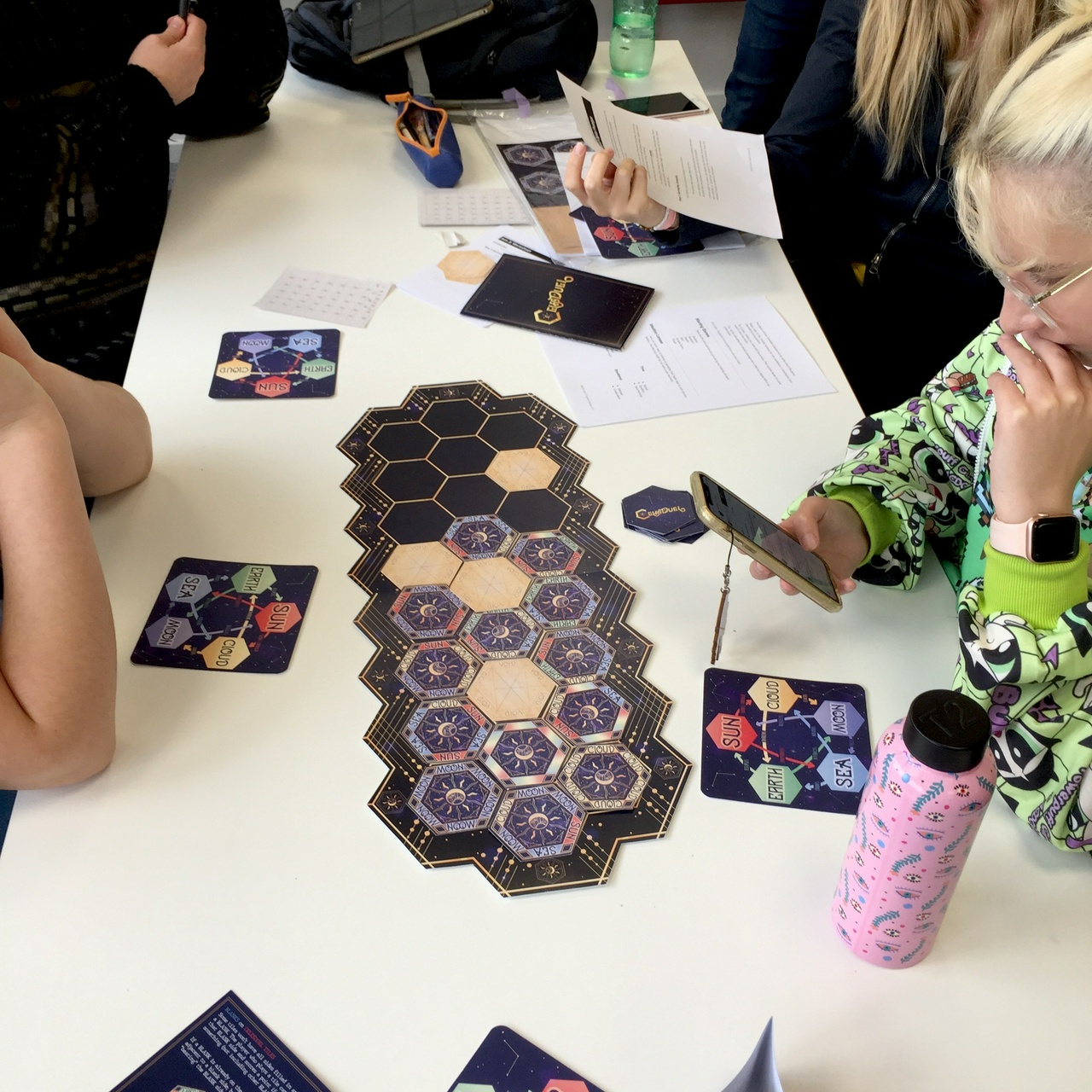
Here are some photos from the initial playtest of the game they developed:

John Savio: even more awesome woodcuts.
#Artist

John Savio was a Norwegian artist of the early 20th century. While he died young and rather destitute, his work lives on. Because it's gorgeous.

I don't know why I'm so into woodcuts and linocuts recently. I made some for my family for Christmas, perhaps I should post those.