Lucas Haley

Board

Getting good
#Board Games #Treasure Hunt #Wellington

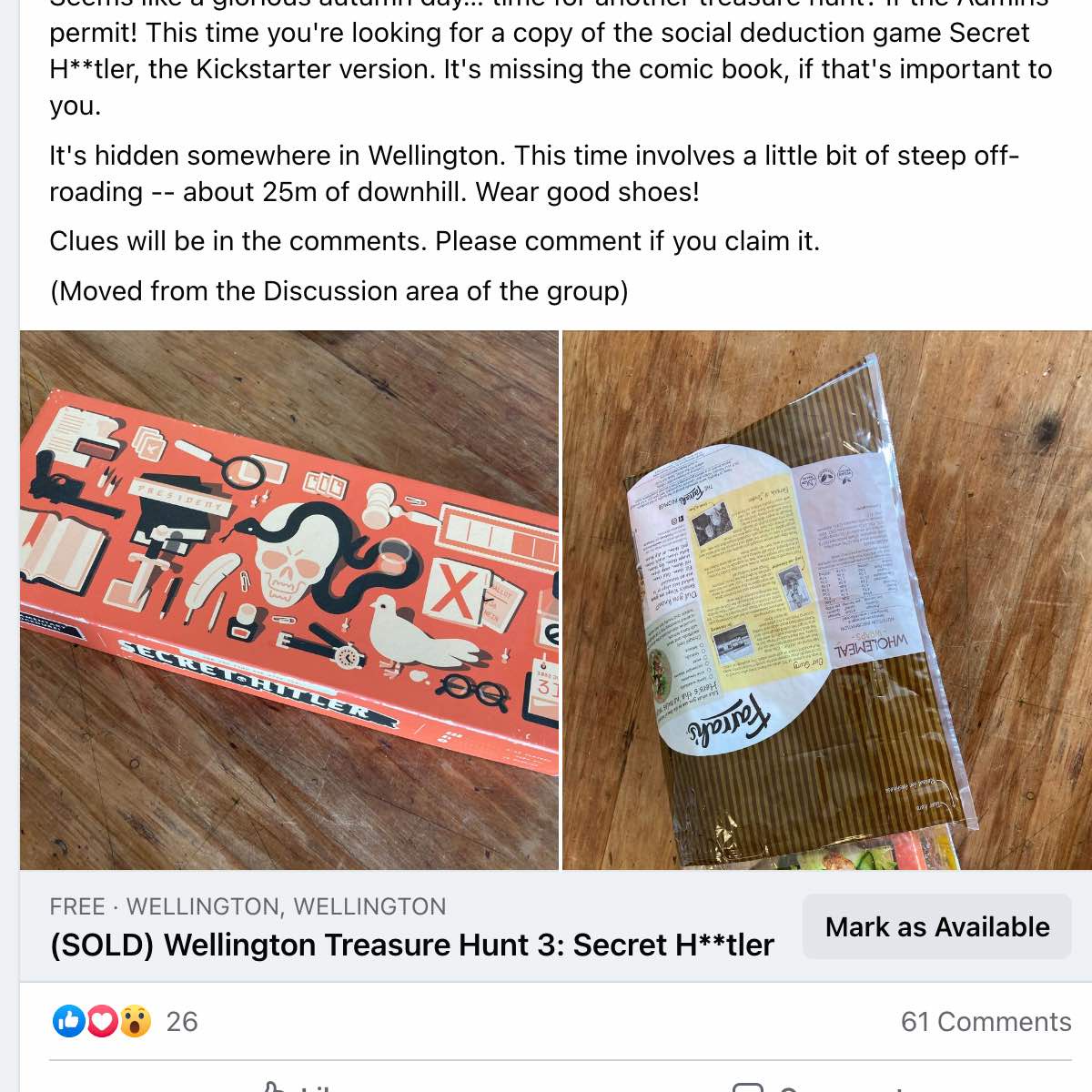
This one was pretty special for me. I did a lot of wandering around looking for a good spot up in Mt. Victoria park, and collecting clue photos. But when I got back to the car, my keys were missing! I had to retrace all my steps through the bush, and totally luckily found them again. A one-in-a-million chance.

I got a little more tricky with the clues — instead of just showing the location, I had four locations create a X that marked the spot. Unfortunately I didn't realise there are two beachfront empanada places in Wellington. Who would have thought.

Then the hunt itself was great — it seemed like nobody was going to find it, but then in the middle of the night some fellows tracked it down. Their videos were awesome.

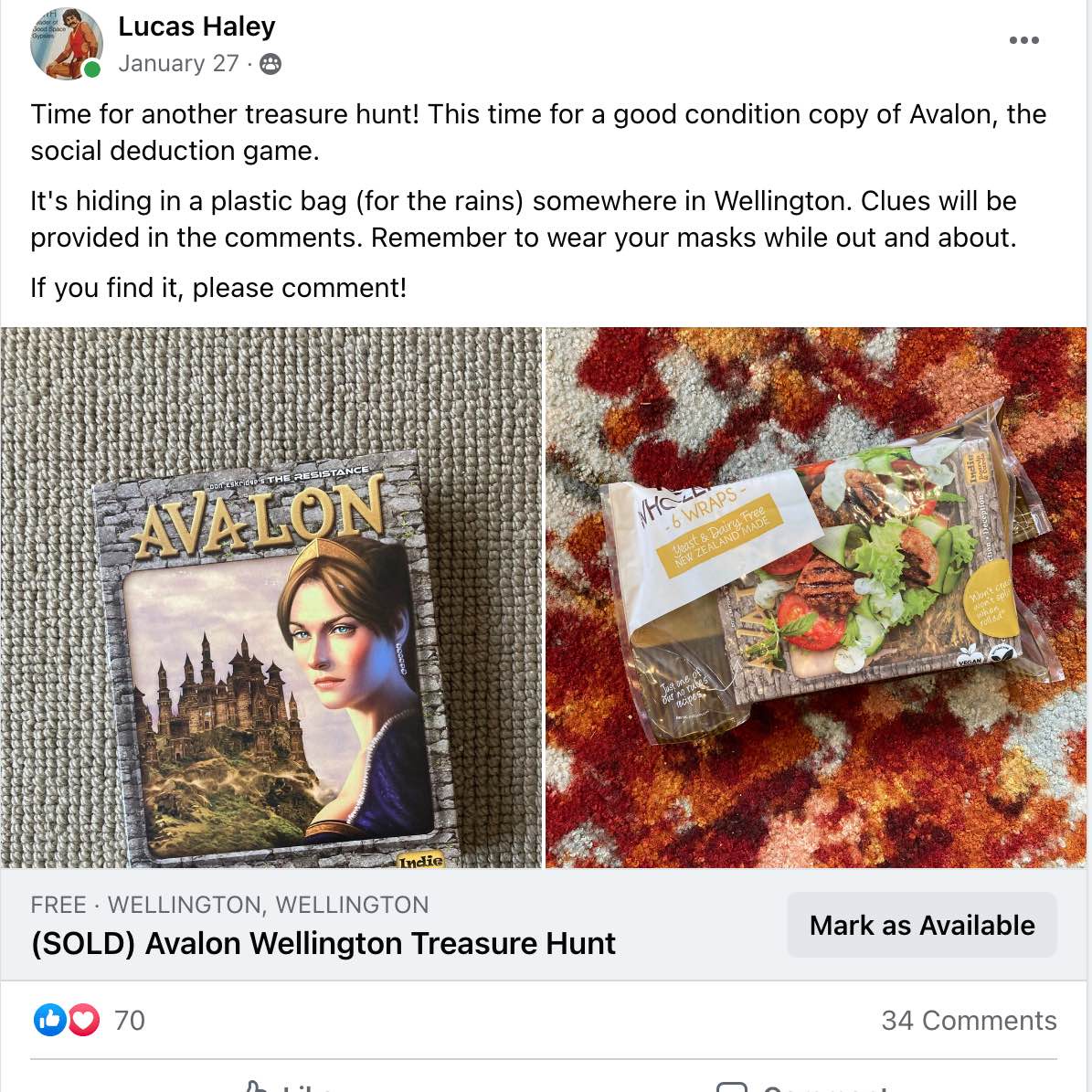
Stepping up a little
#Treasure Hunt #Wellington #Board Games

So the first one went alright — perhaps over too quickly. The next one I did from work, just chucking it behind a sculpture. But I did take a little more time to create more interesting clues.

This one was also the first one where the community kinda got into it, and the winner posted their success. That made me glad.

Because I'm too lazy to ship
#Board Games #Wellington #Treasure Hunt

There are quite a lot of things in New Zealand that are relatively much more expensive than other places. Mainly because they have to be shipped there from overseas, but also because the population is quite small. Like, smaller than Pheonix, AZ.

One of those things are board games. They can be almost twice as much as back in the USA, and that can be quite prohibitive. So there's quite a robust resale market, mostly on Facebook.

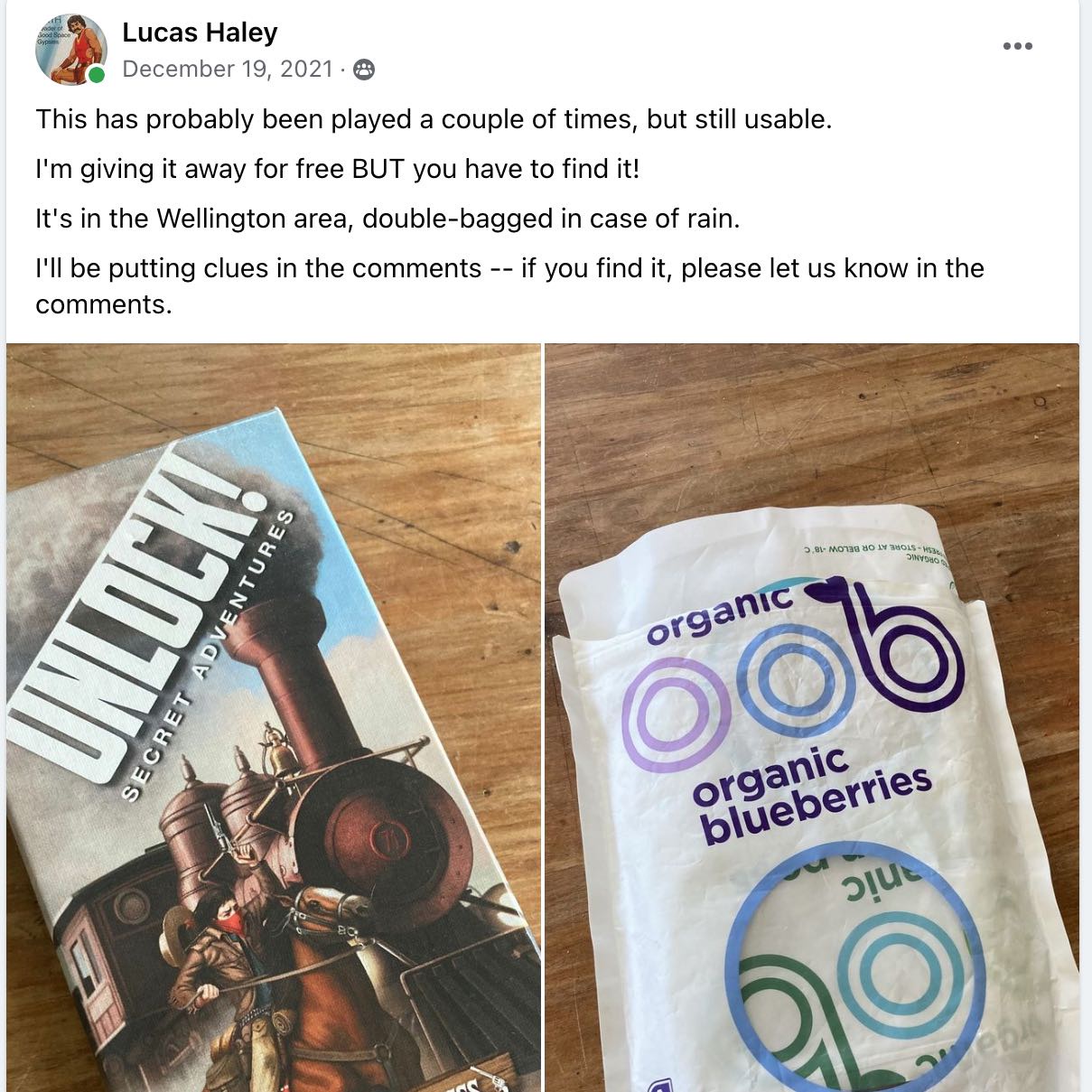
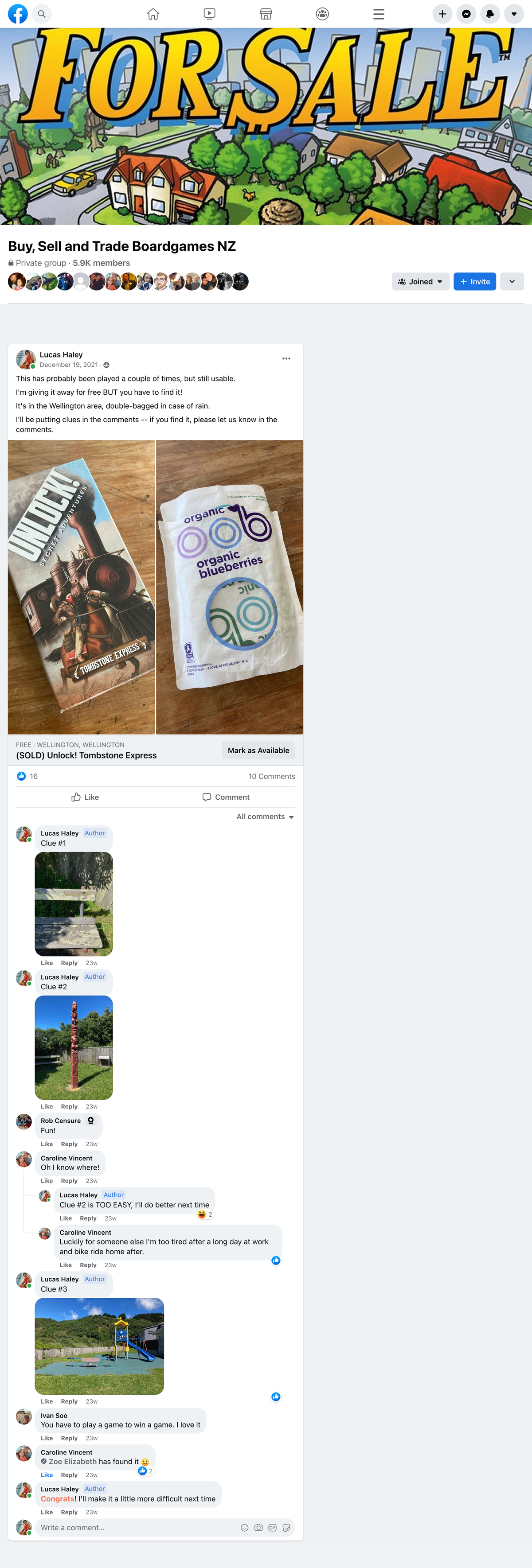
I'm quite lazy, however. And the idea of boxing things up and shipping them is a bit of a drag. So I decided to just leave spare games around the city. Just lying around. For people to find.

To make it more interesting, to those Facebook resale channels I post clues. Usually the game is found in the first few hours. Here's the first one.

On using a classic game as a basis for further development.
#Board Games #Instruction #Game Design

In my game development courses, I will often ask my students to take an existing game – blackjack, hopscotch, Jenga – and try to make a new game from those basic rules. It's a common exercise, and quite a good one for beginning designers, as you have a clear and well-defined game rules.

At the start of this semester I asked my student to riff off one of the oldest games ever, Rock Paper Scissors. There are quite a lot of variants, all known as “ken” games, from the Japanese word for “fist”.

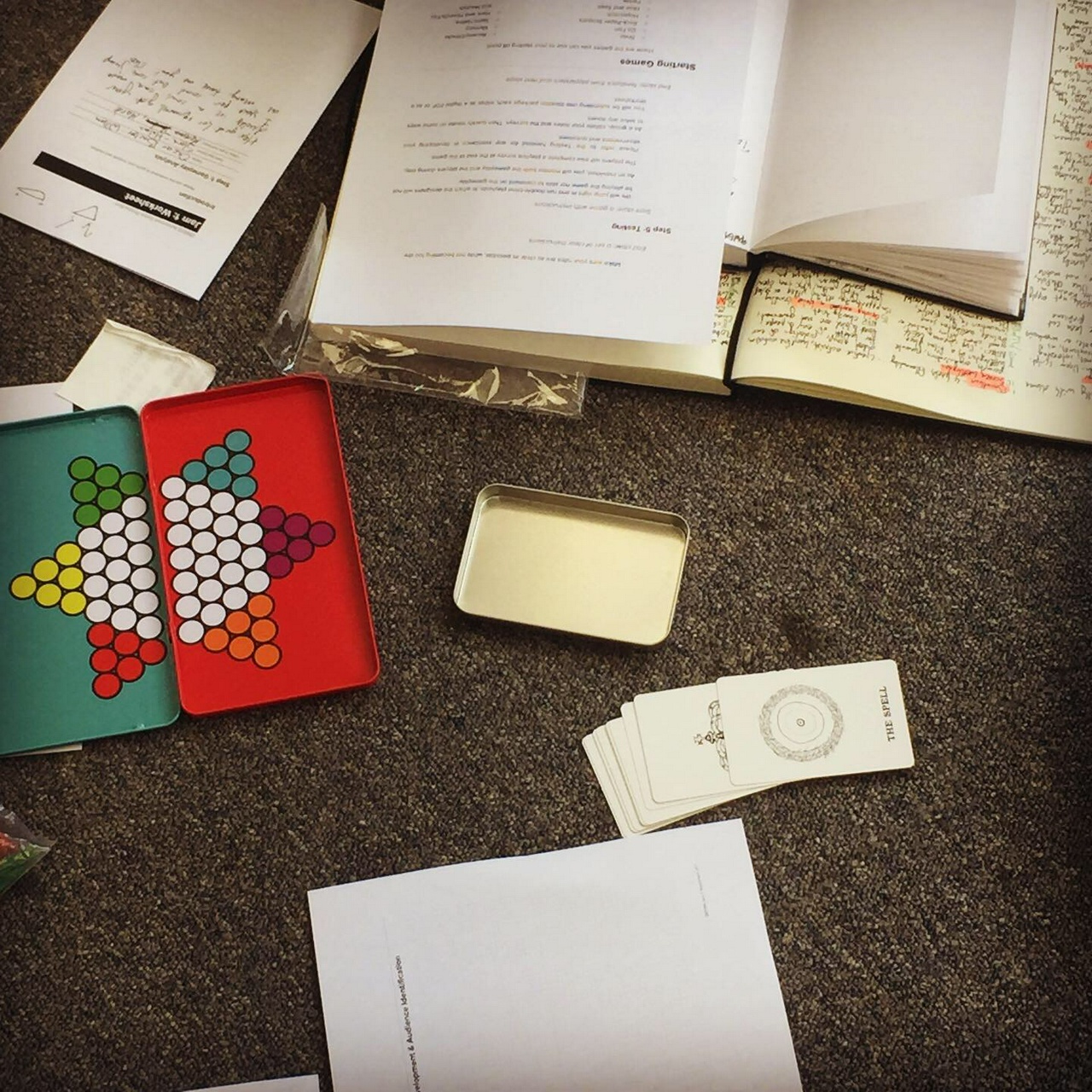
This year, students looted my supply of prototyping stuff – a vault of cards, tiles, dice, tokens, etc. that I use to throw a game together for testing.

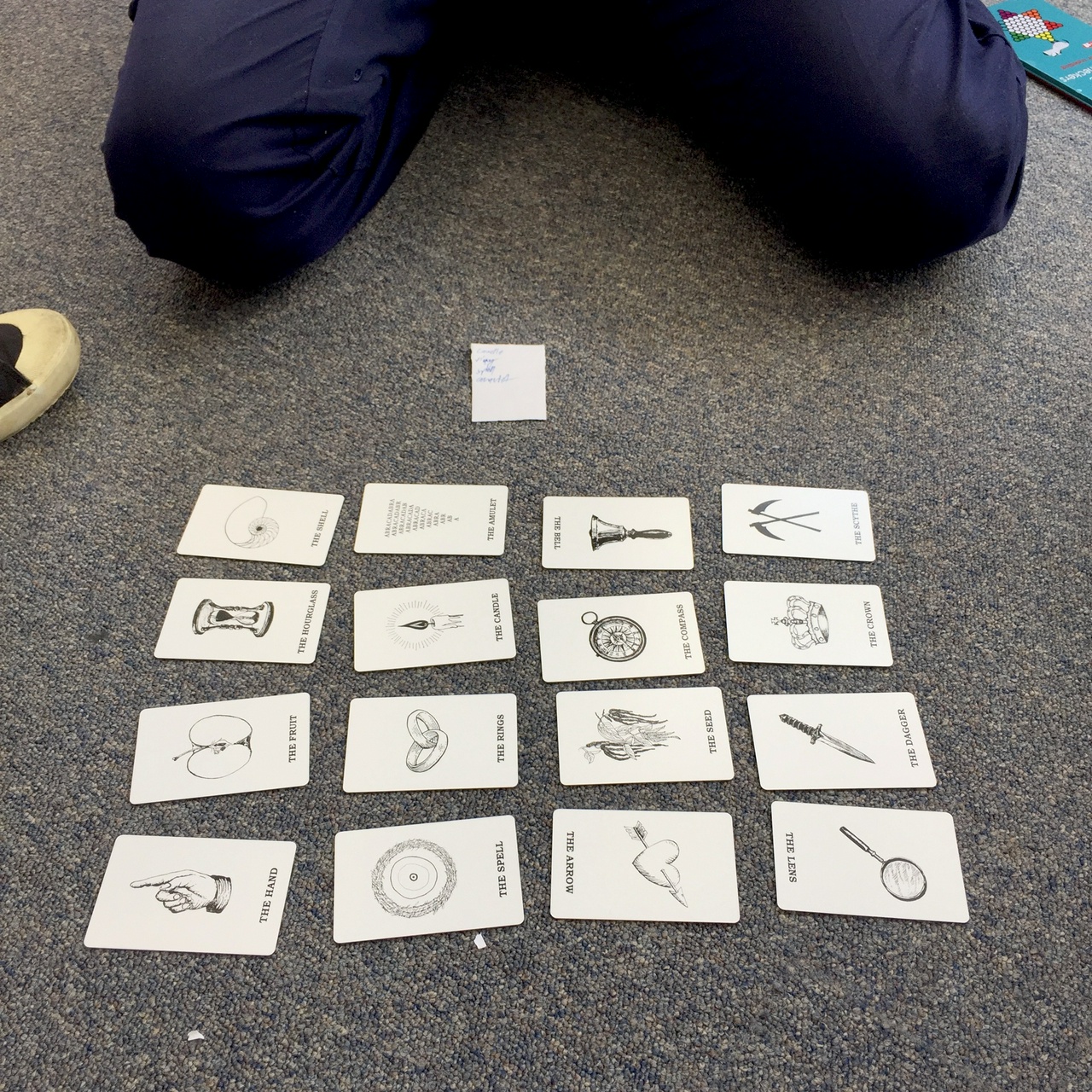
One team grabbed the Personal Oracle deck, a cool deck of loaded symbols primarily used for divination. Their game revolved around memory and card-swapping.

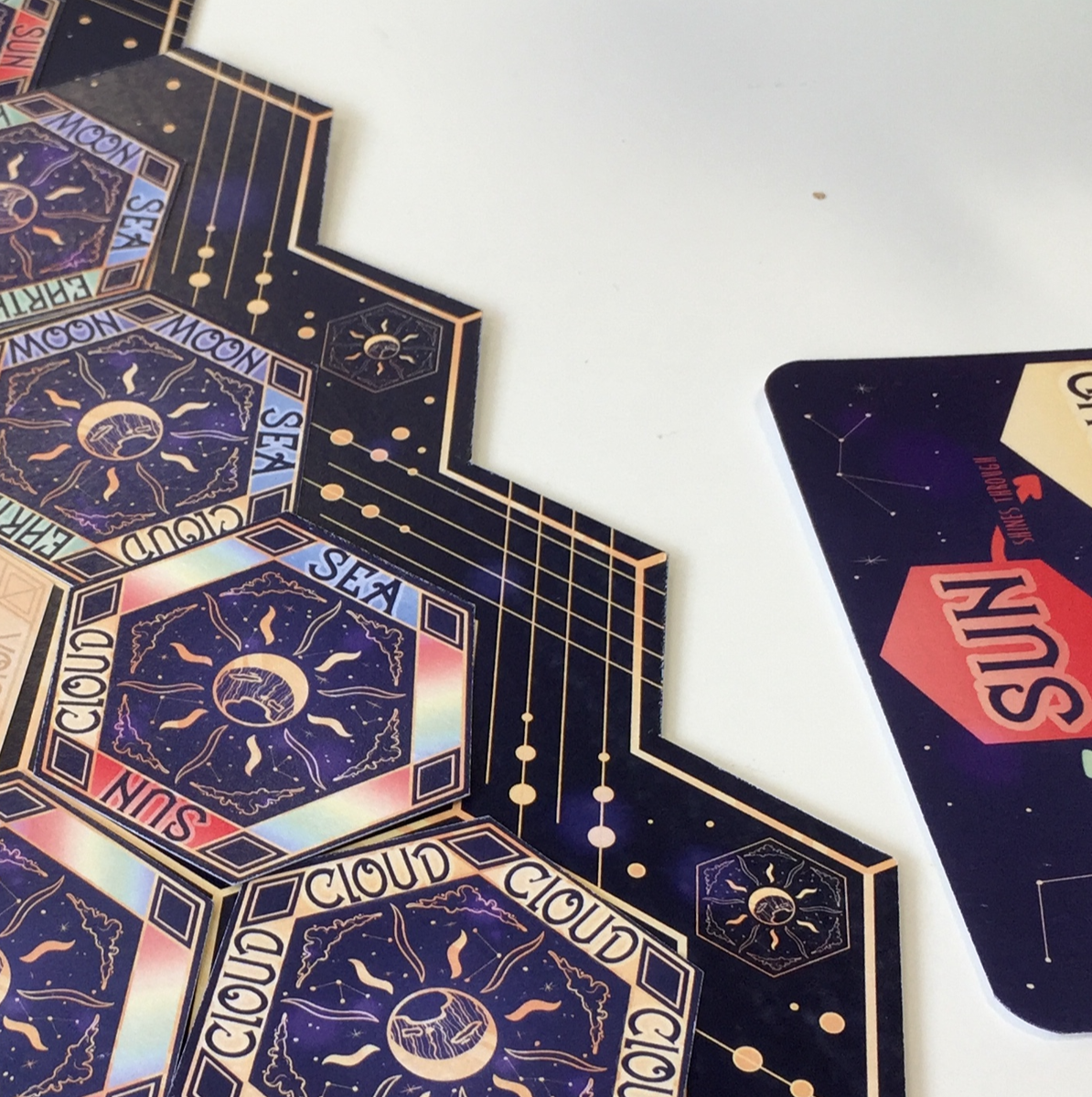
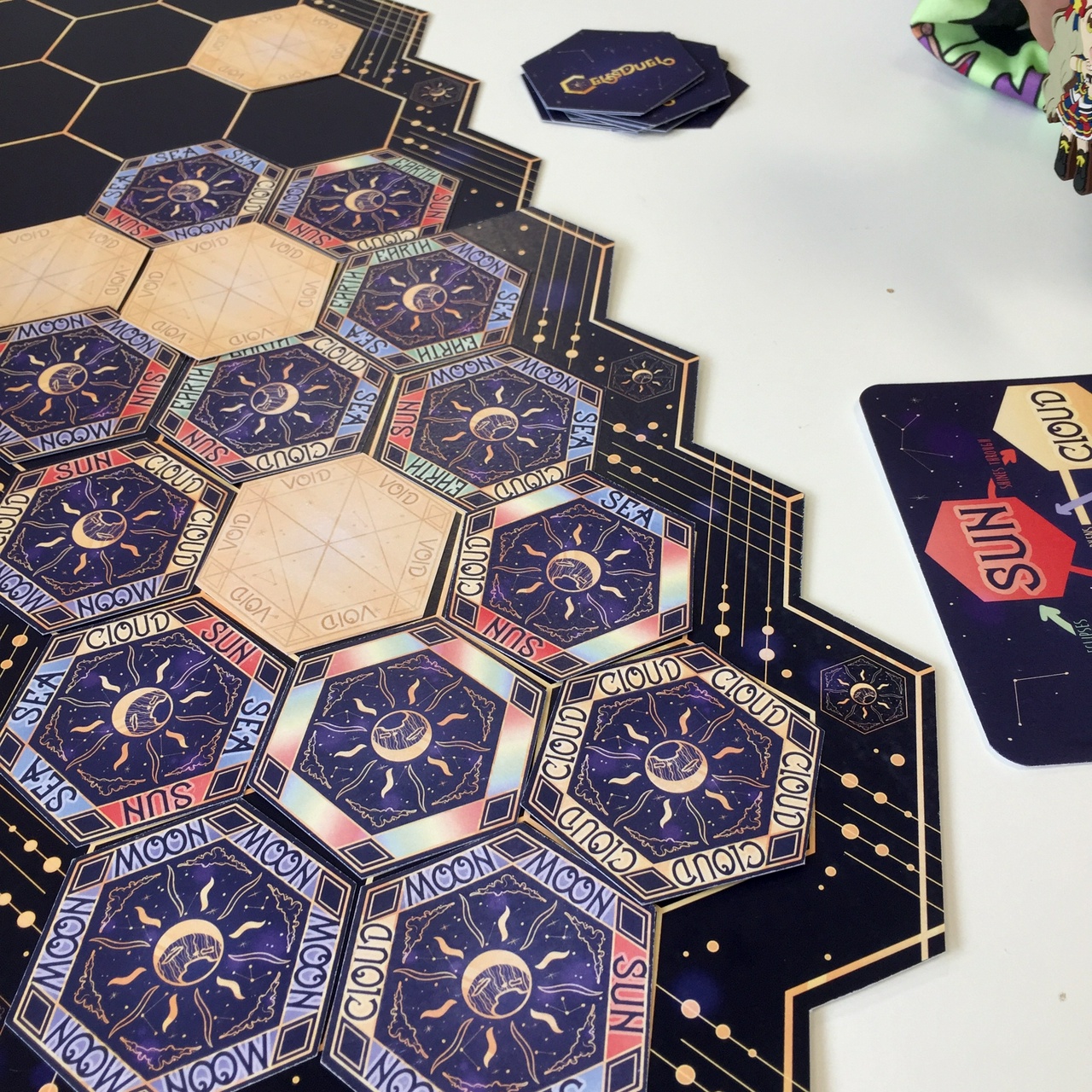
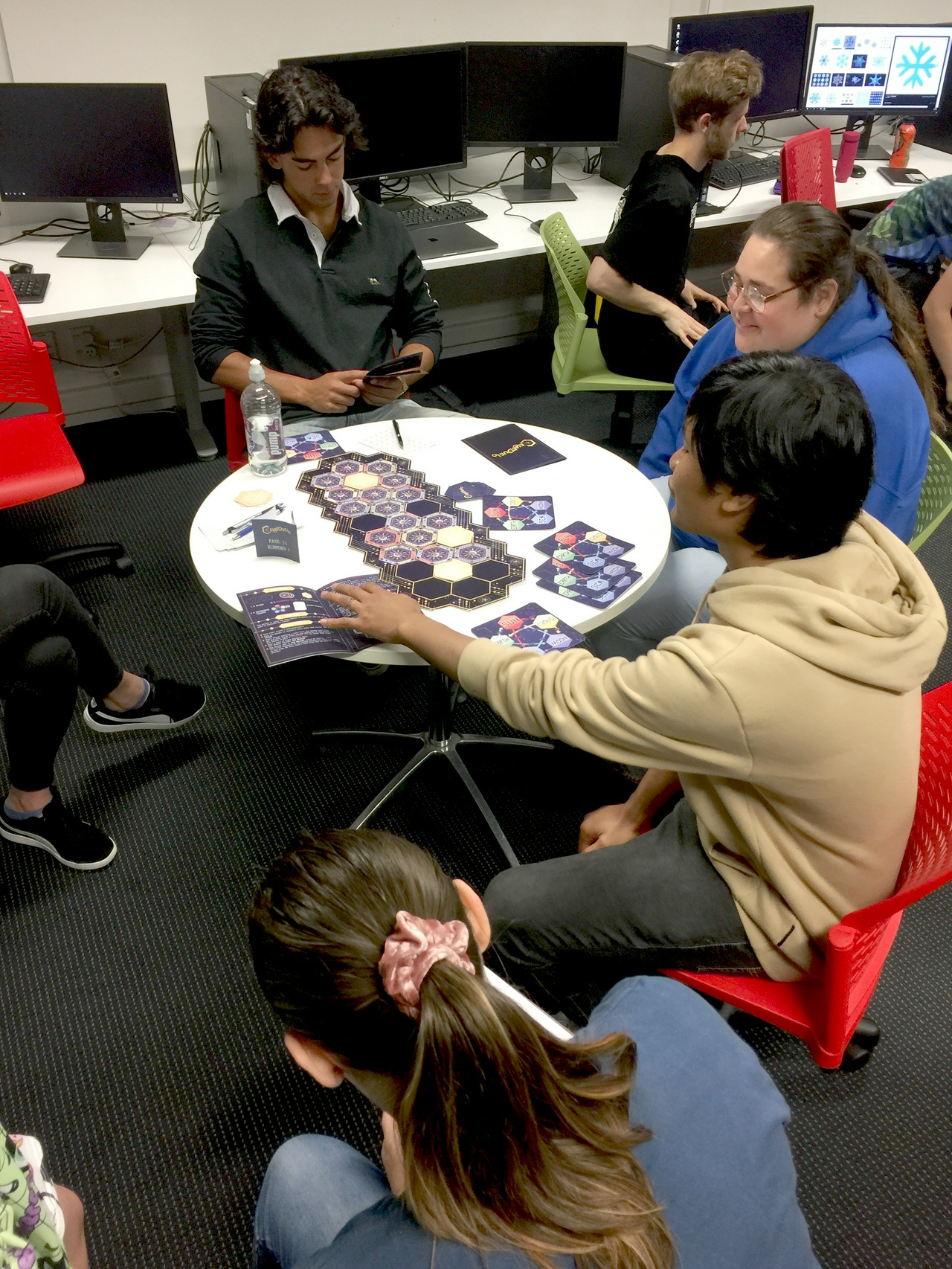
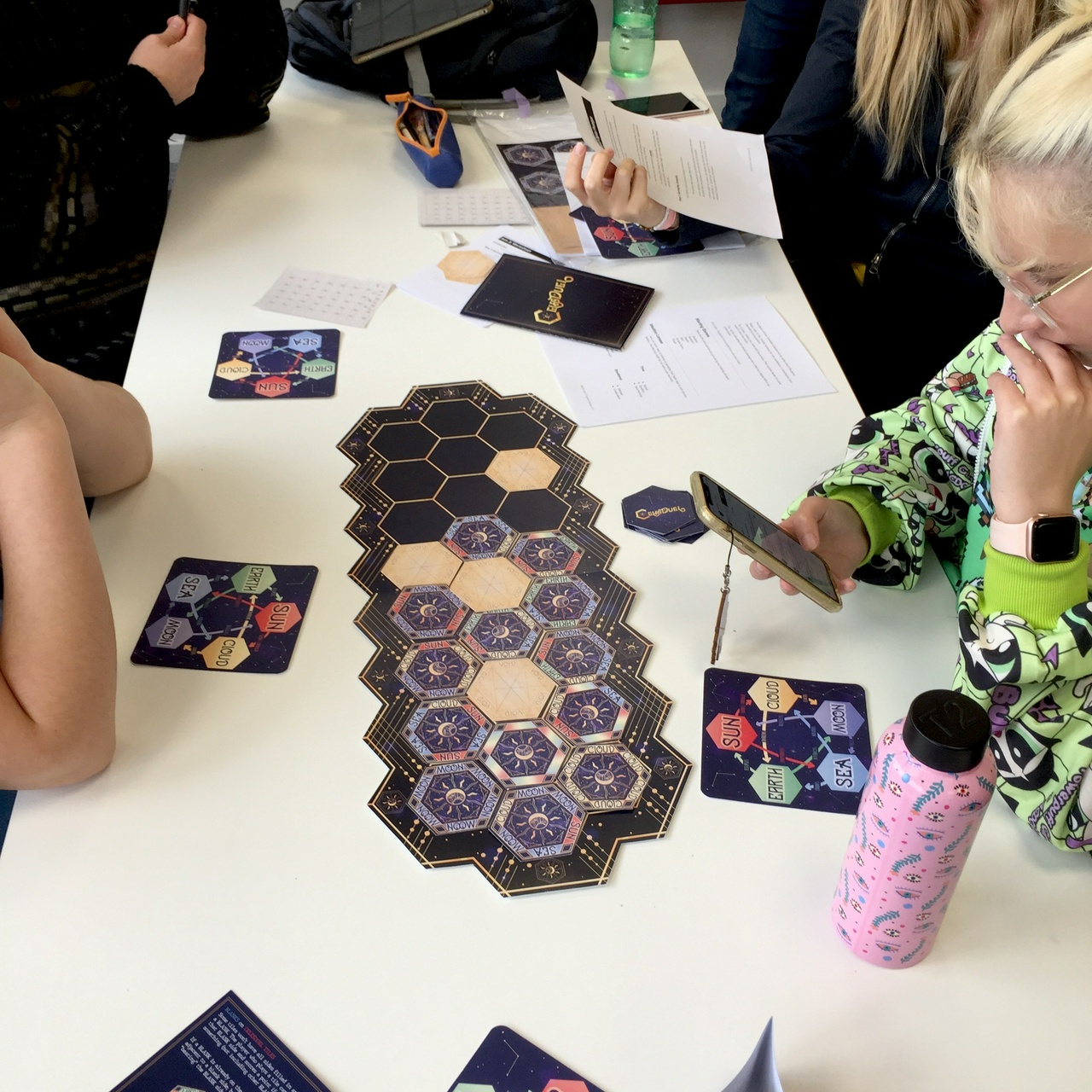
One team gravitated towards the hex tiles. After making a suggestion of corrolating the six sides with the three throw choices, they were off.

Here are some photos from the initial playtest of the game they developed:

Suddenly teaching board game design
#Instruction #Board Games

So I just wrapped up spring quarter at the Art Institute of Portland. A week before the quarter started, I was suddenly assigned to teach “Game Design and Play”, the board game design class. I had never taught the class before, and although there were some existing syllabuses, there really wasn't anything to go on. And not enough time to get anything going.

Now I'm not the most structured of teachers – I prefer leaving the class open to go where it needs to go, as the students explore the material. But this class was well beyond that. I was upfront with the students, and together we explored the material. It was fun.

Hopefully it was enlightening.

Part of my approach was to bring the idea of a game to all parts of the class. For their final, I challenged them to come up with a complete game in the two hours allotted. The main requirement was to have, as the central game mechanic, something involving the following (which I provided):

  • 3 standard four-sided dice; red, green, and blue
  • 1 blank white four-sided die

They were also allowed to use the small plastic case the dice came in.

Beyond that, the students could include anything they could come up with. I had some construction paper, colored and white cards, and the like.

Now, I hope the students were sufficiently challenged, and had fun with it. But the things that really struck me about their process were:

  • how much the students wanted to team up. There were two teams of five (five!) people, and some individuals. I couldn't tell if it was safety in numbers or a genuine desire for collaboration. It was just surprising. If that were me, if I were to team up, it would be with one other person. Maybe. Not that I dislike teams, but that in those initial brainstorming minutes, I would want direction and focus, not consensus.
  • how much video games influenced their designs. It's a video game world out there now, and the majority of the games they came up with were video games on paper. Again, I'm not making a judgement call here. But I do think that video games and board games are different, and each design process should be different.

I'll be teaching the class again in the fall, which I am looking forward to. I'll hopefully have time to develop more lectures about game theory, combinatorics, emergent behaviour, metaphors and mechanics.

And I'll have to come up with a new final exam challenge.